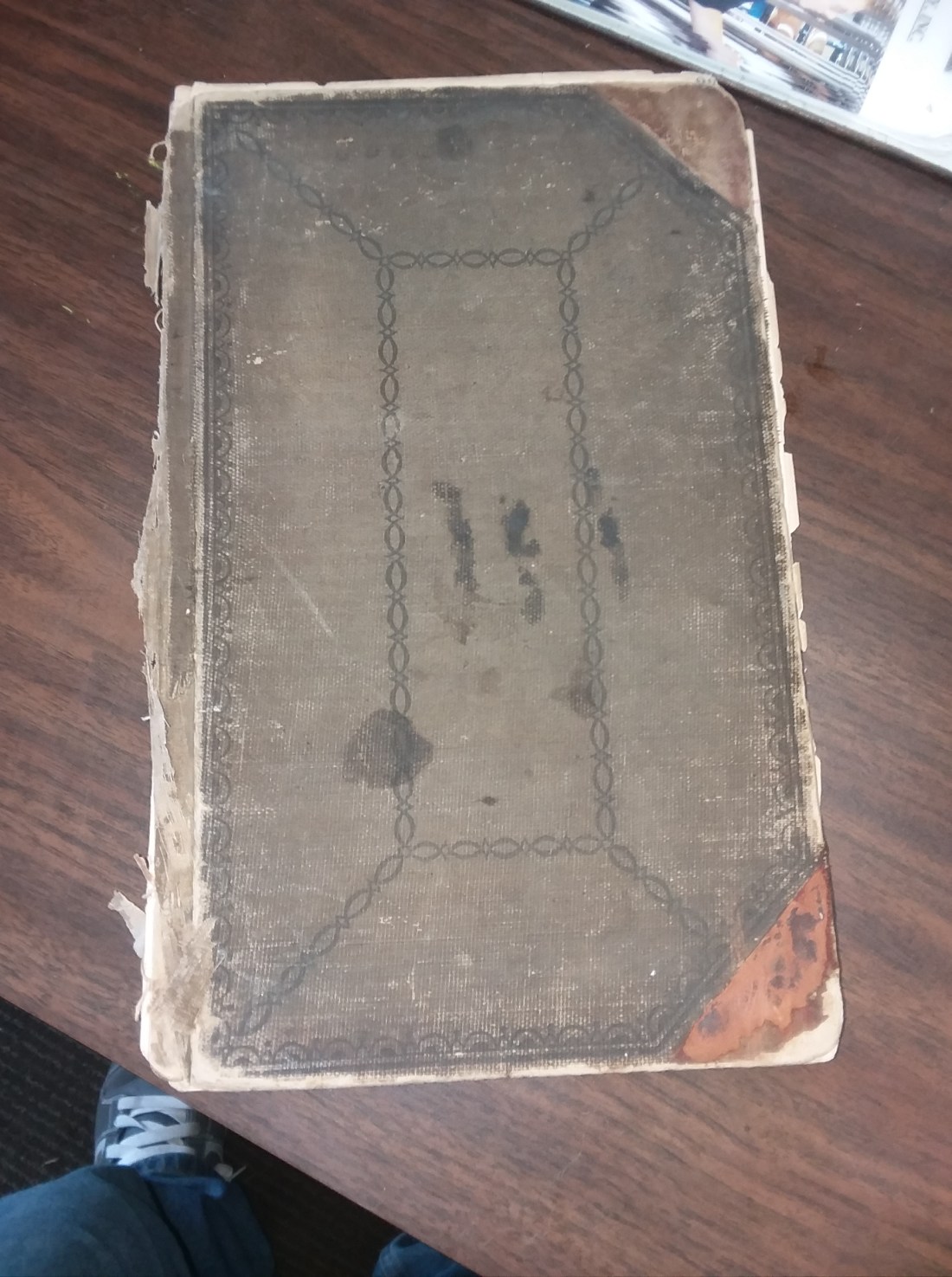
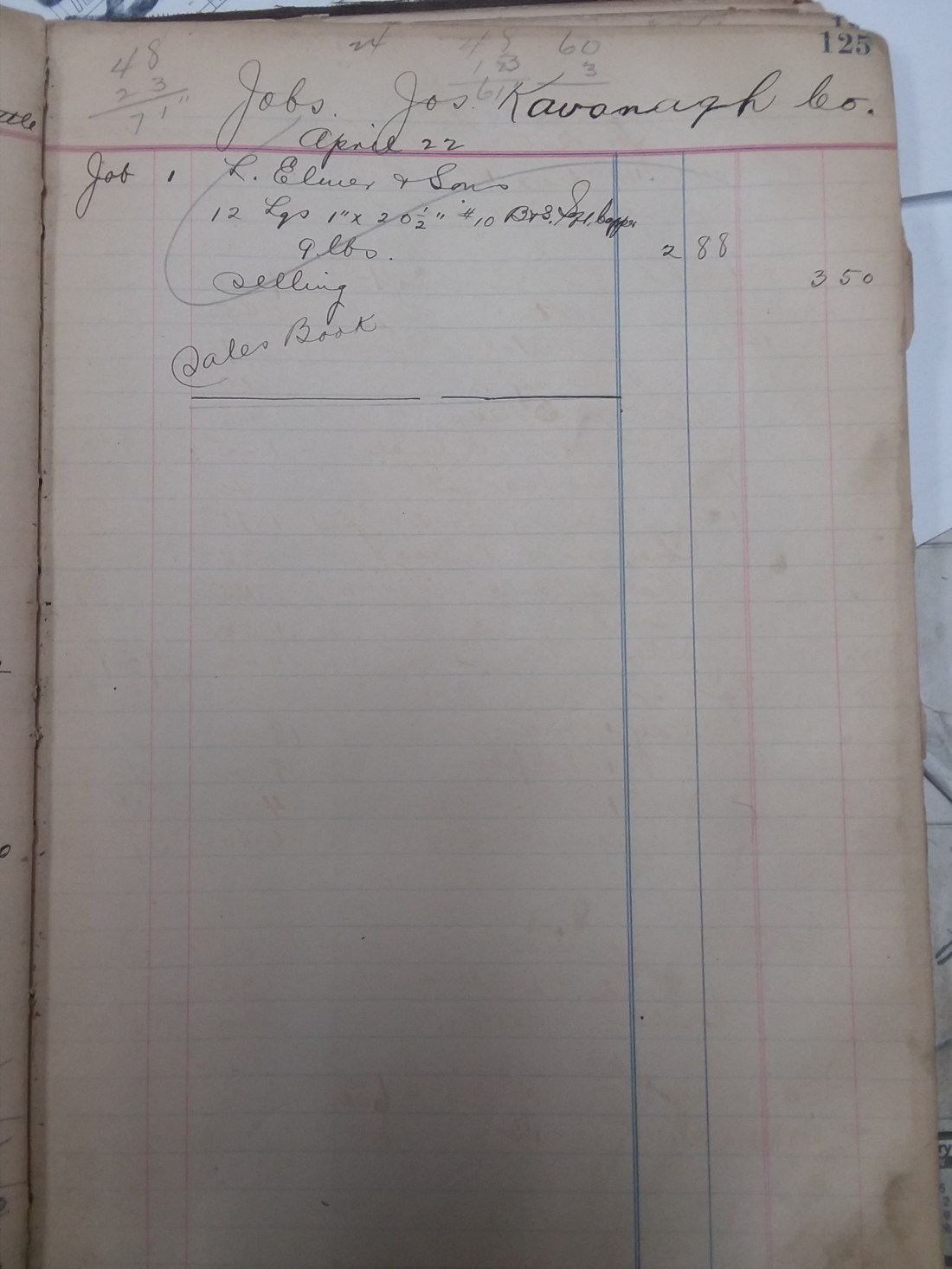
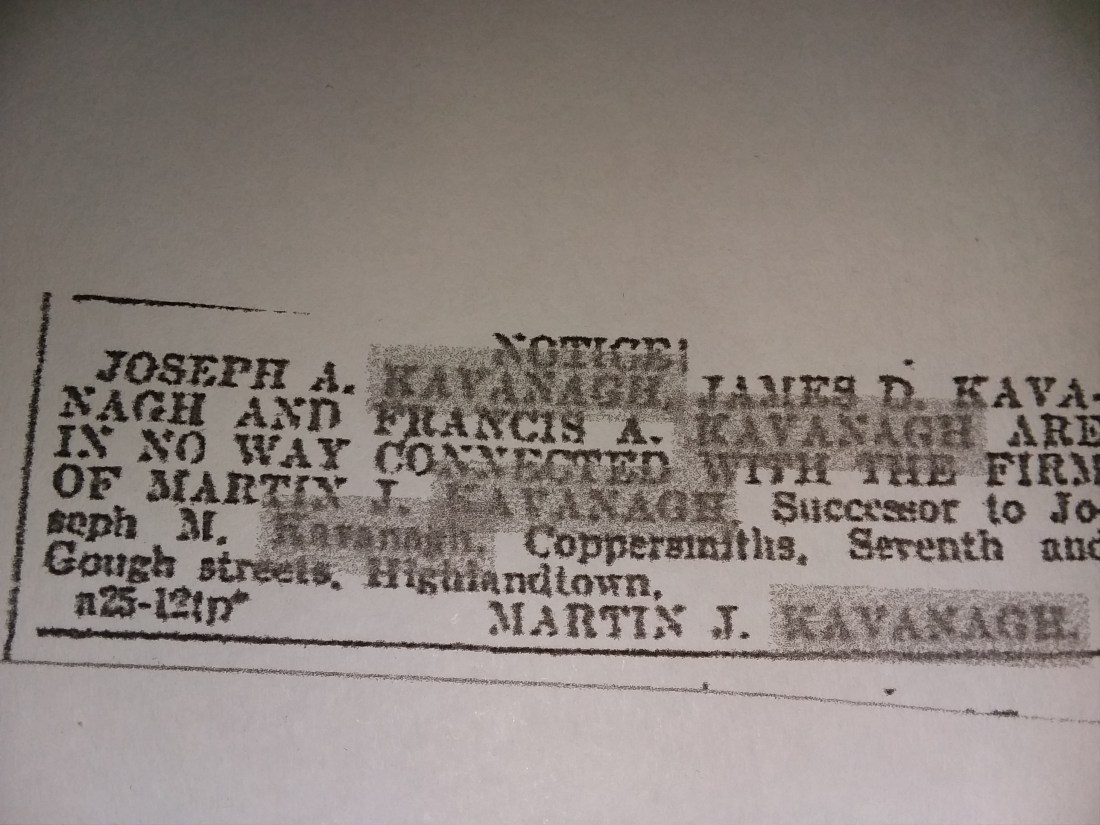
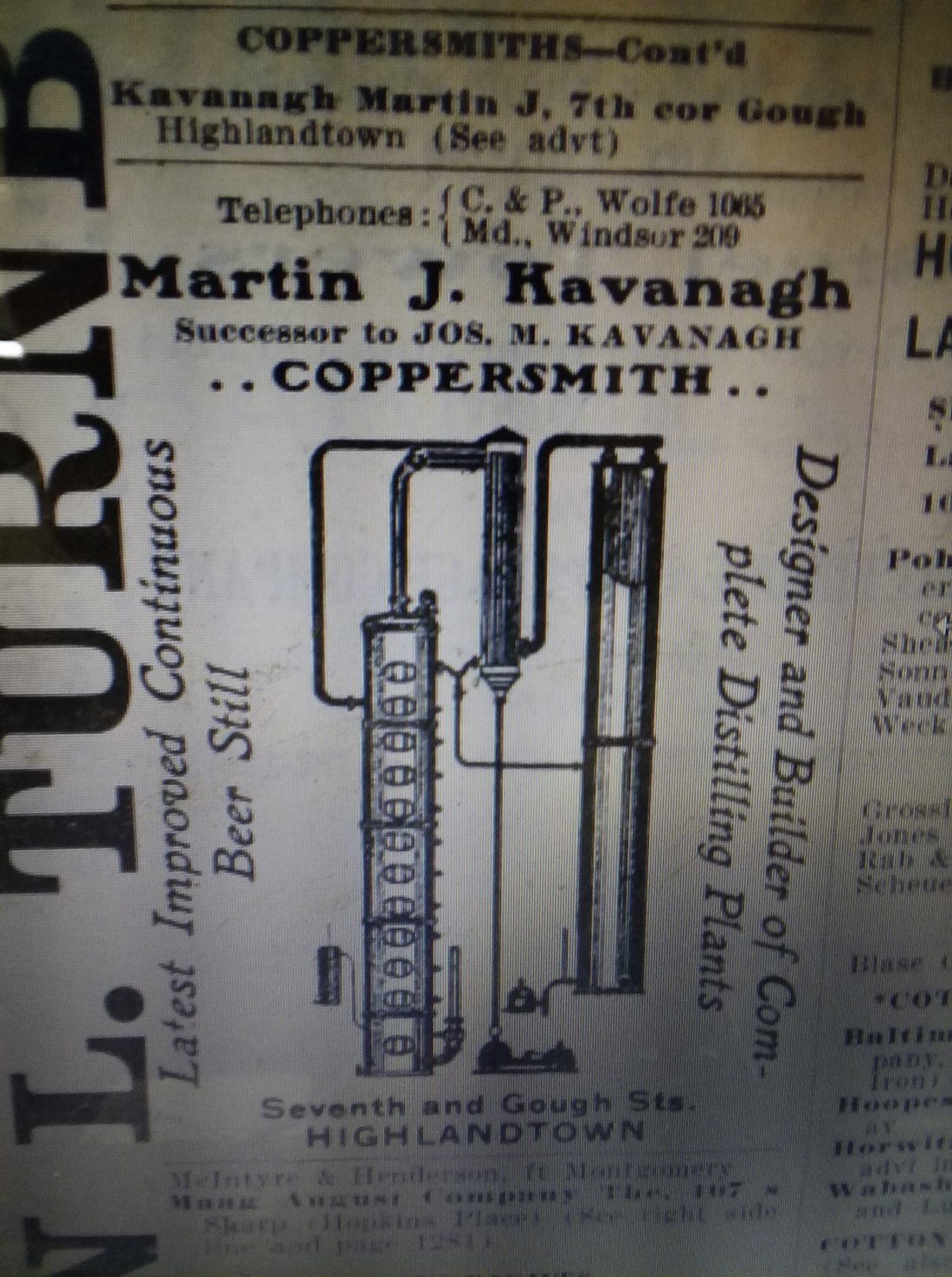
1906 The Pie and Whiskey Conspiracy

January 2

The Shop begins a new year focused on the large distilling system for Gwynnbrook. There are many parts to be made in addition to the stills themselves. Also, Martin hires Charles Whiteford as a consultant. Mr. Whiteford is a newly elected young member of the MD Legislature. Martin informs his brothers of this hire today. They are surprised and each is curious why. Martin thinks that having a little help in Annapolis will assist with job procurement. It helps to have someone with our interest at heart in the government he says. This will bring them more projects like Gwynnbrook. Joe tells Martin this is a ridiculous waste of money. If we are still unable to bring our salaries to where they were before the Fire, how can we pay this man? Martin lets Joe know that this is his call. This will help them draw in work and get to the point where everyone can make more money. Joe doesn’t like it, but Martin is the boss.

January 10

Candy and ice cream kettles are made along with the Gwynnbrook job. This keeps the Shop’s crew working hard. A deadline approaches. They must have Gwynnbrook prepared by the end of February. The winter’s cold is fought off by constant use of blow-pipes as they heat and hammer. Shaping the pots and pans to create the continuous column still. Assorted tubes, bearings and fittings are created. Nearly eight weeks of work must be done in six.

February 26

Martin J. Kavanagh Jr. is born. Martin and his wife are thrilled to welcome a son. The Kavanaghs are excited at yet another addition to this large clan. Martin is doubly happy because the Gwynnbrook job is finished on time, but just barely.

March 1

Maryland Historical Magazine is first published by the Maryland Historical Society. The Shop is suddenly very slow. Spring is a bad time to be slow. They did have a better winter due to one large project, but it was a tough job. The crew worked harder and more hours with wages still reduced from two year prior. The younger brothers are frustrated with Martin. Even after the Gwynnbrook project, Martin still does not have the money to increase salaries. The profit on the distillery was not what he expected. The dissatisfaction with Martin spreads to his non-Kavanagh crew whose wages were reduced even more so. Two of their experienced coppersmiths quit. Two fellows who worked for Uncle Joe and were quite skilled. They are unable to carry on with less money. The Shop’s crew drops to seven.

April 9

The 40th Anniversary of the Shop is not celebrated. It may have passed from memory by now, but it’s not the same Shop. Martin and his friends run a batch of whiskey which becomes more and more common. Frank is at Arrow Brewery. He and a helper work on some repairs. Replacing some fittings and soldering seams. The rest of the crew make some spare pans and kettles for stock. They wait for more work. Joe waits for the telephone to ring.

June 7

The steamship work arrives just in time.. The pump-chambers are fabricated by the Shop while brass stacks, fittings and gauges are made by Kavanagh-Ward Brass. Both companies are busy and the Kavanaghs and crew are working for both. James, as always, doing the engineering and making drawings. Frank and the one remaining pure smith each paired with a helper taking on the copper work. They have several cooking kettles to work on as well. Both Kavanagh-Ward Brass and the Shop are very busy very suddenly. Everyone works extra hours. They must take the work when they can and take advantage of it. On this day, Martin returns to the Shop for the first time in three days. He arrives after lunch well fed and slightly inebriated. Joe is angry but James is livid. They demand to get more money. They have given Martin time. He swears he will do so as soon as he can then storms out.

June 8

Martin returns and promises to find a way to pay them more. He will help as much as he can on the steam ship work they have. He spends the day with Frank and his helper working on a chamber. For the first time in a year, he is smithing.

July 14

Frank’s wife, Augusta gives birth to their first child, a boy named William Christian. The youngest brother has his first boy. His mother, Katherine and the family rejoice and pray for his young family.

July 23

They are busy still with some ship work. Joe coordinating with John Ward on much of this. Martin was true to his word for a week. Afterward, he spent a few days in Annapolis. Meeting with Mr. Whiteside. He told his brothers he is trying for more larger projects. Bigger money. The boys toil without his help. His work was sub-standard anyway. According to Frank, his skills have deteriorated and his mood is unmotivated.

August 15

Some small boiler work and commercial cookers are made today. As the pattern continues, they are very slow again. The work keeps coming and going. Two extremes. The jobs they have can be finished in several days, but instead they are stretched over a week. The Shop is clean. A very clean Shop is usually a slow Shop. Martin and his friends make a run of rye. They busily bottle it and leave. Martin again tells his brothers the sale of this whiskey is helping them financially. Kavanagh-Brass is similarly slow. Much of this is due to Baltimore’s recovery from the Fire. The breweries, distilleries, eateries are all still in recovery. The City is bouncing back, but it’s unreasonable to expect it to go any faster than it is. Joe worries more and more about Martin, but keeps it to himself.

October 14

The White Sox beat the Cubs in an all Chicago World Series. The Kavanaghs, even in such tumultuous times, are baseball fans. I am sure they followed closely through the newspaper. The Cubs had posted a record setting 116 wins in the regular season but, fall to the Sox who win four games out of six.

October 16

The Shop receives two very nice bits of work within three days of each other. One is a still replacement at Orient Distilling. The other is a set of new beer vats for Globe Brewery. They are very relieved with winter just around the corner. The crew are ready to work more hours. Martin makes an announcement that he will hire several coppersmiths. He thinks this is the best way to make money fast. Joe and the other brothers strongly protest. They would rather work more hours if they can make more money. They do not want to work more, but they are willing. They just want to be paid accordingly. If they hire more smiths, when the Shop gets slow again, they will have additional salaries to pay. Joe and the younger brothers believe it is better to stay smaller and busier than to get bigger and slower at least for now. Martin will not relent.

October 19

Martin places an ad in the Sun to hire several coppersmiths. The Kavanagh brothers are not happy. Martin is the boss and can decide what he wants to do. They see little chance of any more money anytime in the near future..

October 22

Martin hires two younger smiths. The crew welcomes them, but with skepticism. The first thing Martin has them do is run a pass of rye. They do seem to be smiths, but they do not impress on day one. The Globe Brewery job is nearly finished and will be delivered in several days. They begin work on the still for Orient. Martin, more and more, hovers between intoxicated or hungover, but stays consistently unreliable. Joe becomes more desperate that he must do something. He begins to consider leaving.

November 10

In Annapolis, “Anchors Aweigh” is written by Naval Academy bandleader, Alfred Hart Miles. It soon becomes the theme song for the United States Navy.

November 22

It’s a quiet Thanksgiving dinner for Joseph and Johanna with their sons, Leo and Eddie, and their daughter, Alice. They celebrate and are thankful. After dinner when the children are in bed. Joe opens up to Jo about the problems at work and his concerns. She is very aware of their financial issues and she knows Martin. Joe tells her he thinks he needs to leave. He can not work there much longer and he is not sure how long the Shop will be there. Martin’s haphazard running of the place and the spotty work are making it tough. He would like to give it a go on his own. He thinks he could get his brothers to come along .They can try to start their own Shop. He is confident they can do it. They know the jobs, customers and what to do. He would need money to get premises and to get started. He knows he and his brothers do not have the money to start. They have some, but not nearly enough. Jo has money she inherited from her parents. Insurance money. She always had her own money. A strong independent Irish woman. She ran a boarding house while Joe was off singing in his music days. He took long tours and she worked. Even now she bakes pies and cakes and sells these treats in the neighborhood. She always had her own money. It is hers and Joe knows better than to ask for it. Before he gets to that point, she offers. She believes in him and his brothers, but this is her money. They will have to sign notes and the money will have to be paid back. She is clear on this. It is her money for her future and her children. Joe is grateful and assures her that the money will be paid back. He will use the money as seed money to get a new business started. If not, the Shop will likely disappear or he will certainly have to find something else to do. He will need to find a building and make other plans. She asks him to give it all some thought first before speaking to James and Frank. He must have a plan and he must be sure. He must remember. It is her money.

December 8

Joe and Jo have a long Saturday night discussion. Joe has given his idea a great deal of thought. He is sure that he and his brothers can make a go of it. James the engineer and draftsman. Frank the very skilled coppersmith and Joe the talker. They may be able to get one or two of the Shop’s helpers, but at first it will just be the brothers. They will have to start small and try to stay busy. He wants to do this. Johanna listens She tells him to invite his brothers to Sunday dinner. She’ll make a ham.

December 9

James and Frank arrive for Sunday dinner in the rain. Johanna welcomes them. They greet and play with the kids for a few minutes. They enjoy a traditional ham and potatoes Irish dinner. They speak of the coming holidays and the neighborhood, but not the Shop. After dinner, the children are ushered out of the dining room.

The brothers sit and smoke. Joe opens a bottle of Monticello Rye. His personal favorite. James speaks up and is anxious to hear Joe’s proposal. Frank is just as ready to talk about Martin and the Shop. Joe asks them to wait and have a drink. Several moments later, Johanna joins them carrying a half of an apple pie and tea. She takes her seat. She cuts a piece for all and pours tea. Joe tells his brothers his plan. He knows that they agree on his assessment of Martin. Their brother is drinking too much. He sometimes doesn’t show up. Something is amiss with the Shop’s money. Martin is burning it up with no end in sight. He hires people for the wrong reasons. Joe feels the Shop could be out of business sooner rather than later. Joe suggests they open their own Shop. The three of them. If they all agree, they must decide now .They must start planning now. James asks where will the money come from. Jo answers him. She explains that she is willing to lend the necessary money, but it must be paid back. She will give them time to make the business work. They must all sign a note to her even Joe. They have to agree to this or she will not do it. James and Frank are taken aback a bit. They agree. They realize this may be their only opportunity. Also, they know her. Joe finishes his proposition to them. He will find a place. They will work for Martin until everything is ready. Then they will act. The three will be equal partners. All will own a piece of the Shop. Joe thinks he should be president. He makes the deals, knows the customers, does the books and is the senior brother. They will all three make the same salary though. He also impresses on them that Uncle Joe had a dream for the Shop and the family. The brothers working together. This is not it. He stresses. We must do this for Joe and for their futures. They all agree. Joe and James and Frank shake hands. They thank Johanna and promise to sign any required note. The loan will be repaid. They hash out the rest of their plan over tea and more pie. Joe will look for premises. All will keep quiet and keep their eyes open. Customer names and jobs are to be memorized as best as possible. Anything of importance shall be noted and recalled. They will aim for the Spring. The brothers will pick up where their uncle started. They will be partners. They will make a new Shop, but they would have no chance without Jo Kavanagh.


Theodore Roosevelt is the President. He visits Panama to review the construction of the Canal. This is the first foreign trip by a sitting president. San Francisco is rocked by a devastating earthquake that kills over 3,000. Devils Tower, Wyoming and the Petrified Forest, Arizona are declared National Monuments. The first forward pass is thrown in American Football at St. Louis University. Lon Chaney Jr., Bugsy Siegel, Lou Costello, Ozzie Nelson and Satchel Paige are born.

There are still 45 states in the Union.

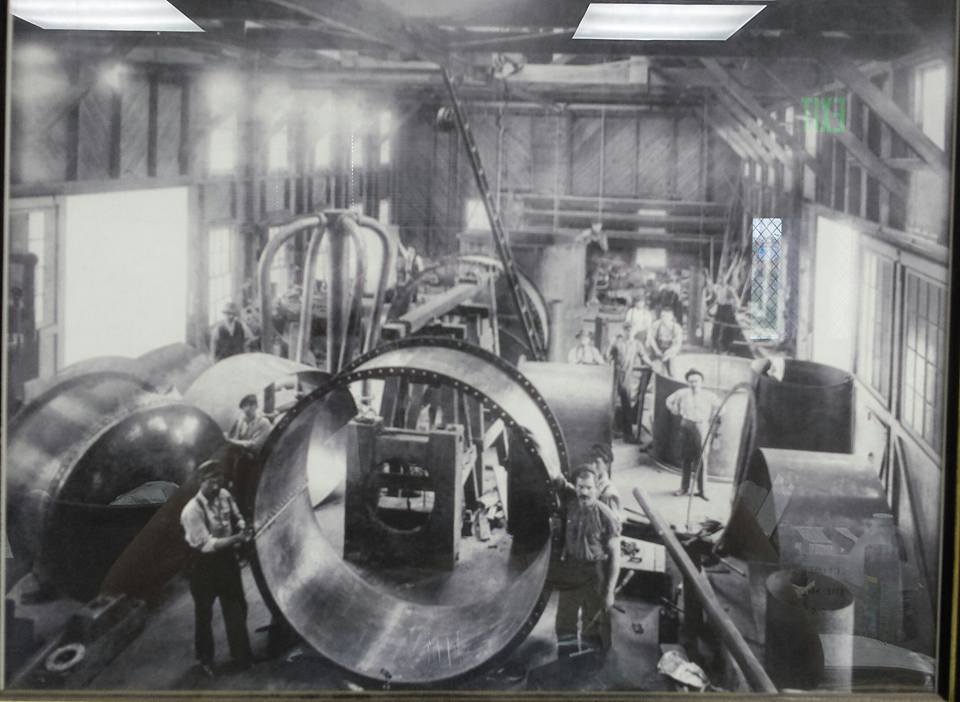
Interior of Gough & 7th Steet - 1904 or 5
The interior of 7th and Gough St. Beer vessels being fabricated in the foreground. 1905.


https://theshop-ahistoryofthejosephkavanaghco.com/table-of-contents/
1905 Joe’s Successor

January 2

The last will and testament of Joseph M. Kavanagh was read soon after his death. The executors of the will were Martin Kavanagh and Joseph France. He being Joe’s lawyer. Subsequently, Mr. France will go on to much bigger and better things. He is named Chief Council to the United Rail Co. and later is the first head of the MD State Bar association. In the will, Martin is named successor and it is revealed that prior to Uncle Joe’s death he signed half of the business over to Martin. By his will, Martin inherits the other half and is now sole-owner of the Shop. Martin also receives $ 25,000. A rather large sum of cash at that time. He also gets Uncle Joe’s gold watch and any other jewelry, but for a diamond ring which was bequeathed to Martin’s daughter, Kitty. Eugene’s widow and family received $ 1,000. A few other items were given to specific relations. The remaining estate was split among Martin’s younger brothers, Joe, James and Frank and his sister, Sarah. This amounted to approximately $ 2,000 each. There was certainly some surprise and even some hard feelings about the distribution of the will, but everyone accepted it. Regardless, the Shop goes on. Just prior to Joe’s death, Martin had made arrangements for a move to larger premises. Hopefully permanent premises. They move to 7th and Gough. A large warehouse building where they will share space will other recovering businesses. They rent initially, but Martin will consider buying the property in the future. The move is quick and by the end of the year it is complete. On this day, the first business day of 1905 the Shop’s crew is still settling in to their new home. They have several candy kettles to make. Nephew Joe has continued his job of General Manager and works the phones. In anticipation of the winter work they receive from confectionary companies, Joe has let those customers know that they are very much in business. He passes on their new address and several orders are placed. It is an adjustment for the Kavanaghs. They have worked so long for their uncle. Martin is different. Uncle Joe was very much a stoic whereas Martin is not. Still, they set about their work. They are family and all quite happy that the Shop is moving forward. All quite pleased with the new building and anxious to get to work.

February 2

Martin and his wife welcome a son. Joseph Michael Kavanagh. He is named in honor of Uncle Joe. The family is excited and joyful at this new arrival.

February 7

A cold day begins quietly. Nephew Joe is cold-calling customers. There is not much work. The problem being that most of their customers were impacted directly or indirectly by the Fire. The Shop has 9 employees including Martin and his three brothers. They struggle to keep everyone busy. The space they occupy on Gough Street has several other metals companies, as well. A lot of new faces roam through the building. Some of these are part-time employees for the other companies, but many seem to be friends of Martin’s. Martin tells his brothers that they will all have to make a little less money until the Shop gets back on its feet. They agree. All taking about a 25% cut. They are happy to have jobs so there is no grumbling. Martin sets his crew to building a 100 gallon still in the building. As Uncle Joe did before, it will serve as a display still for customers to view. Also, Martin confides to his brothers that there is a market for basic pure rye and they may have to dip into it to make some money. He is really saying they may have to sell illegal whiskey to be used in bars of lesser repute. Those willing to buy non-brand whiskey and sell it. The brothers and the other workers go along as they trust that Martin is right. He is the most experienced man there and the longest tenured Shop employee.

March 2

Young Joe’s father-in-law, James Long, dies. He passes suddenly. His daughter, Johanna is deeply saddened. She was very close to her father. Most of his estate goes to his wife, but Johanna is gifted his pocket watch. Inside is a picture of he, his wife and Johanna and one of her sisters. This watch passes through several generations and now is in my possession.

March 16

Tragically, the infant Joseph M. passes away. He has grown sickly the last two weeks and dies on this day. His parents mourn deeply. Mary is inconsolable, but Martin seems hardened by it. The baby is buried at New Cathedral Cemetery where the elder Joseph M. was laid to rest last year.

March 22

The Shop receives an order for a large storage tank for Gunther’s Brewery. A 300 gallon unit. It’s not the money that they would receive for a still this size, but it is a good order. James and Frank take measurements of the building. James makes the drawings which has always been his forte. Frank and several of the gents will fabricate and assemble the tank. Frank has become one of the best coppersmiths on the crew. He has done so rather quickly. He was, of course, schooled by Uncle Joe himself and seems to have a natural aptitude for shaping and working copper.

April 20

Work is still very spotty so far and Martin approaches his brother Joe with a proposition. He wants to partner with a Brass Works. They have a smaller crew and Martin believes this will help them with the steamship work they usually do in the summer months. Joe is hesitant at first as they are having trouble keeping their crew busy as is. Sending the brazier work out will cut down what they have and they just may need it. Martin assures him that they will still make and repair the pump-chambers which is more their specialty and is more profitable. They will work together focusing on which business is busier at the time. Martin could do this without Joe’s consent, but he wants Joe to handle sales and he wants his involvement. He may need the other brothers, as well. Joe agrees with some hesitation. He trusts Martin and hopes this will be beneficial to the Shop. Kavanagh-Ward Brass is formed by Martin and Joe Kavangh, John Ward, Richard Gardiner and John Stedman. The last two gentleman being primarily financiers. John Ward is a seasoned and experienced brazier. They begin operation almost immediately at 7th & Gough along with the Joseph Kavanagh Co.

Kavanagh-Ward Brass
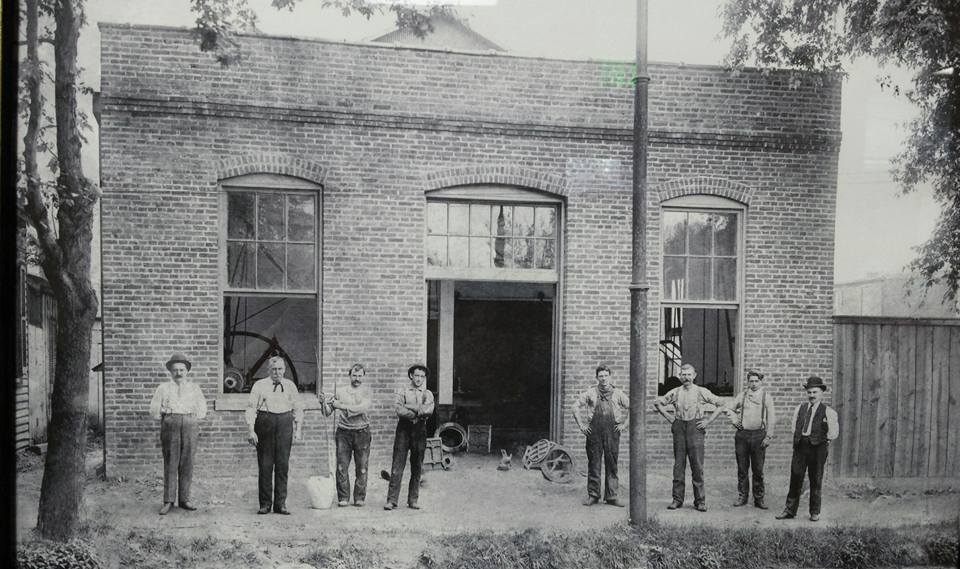
Kavanagh-Ward Brass. 1905. 7th & Gough St. Far left is James Kavanagh, next over is John Ward. Far right is Joseph A. Kavanagh. Promotional photograph.

May 11

The crew of the Shop work on a few cooking kettles and some spare drip pans that they will stock for the distillers. They are still not particularly busy. Kavanagh-Ward Brass is similarly slow. Joe makes a few cold calls through the day. Martin is not at 7th & Gough. When he returns after a two-day absence, he tells his brothers he was out scouting around for more work. Several of Martin’s friends are there. Two fellows whose primary function seems to be running the occasional batch of whiskey in the Shop still. They bottle it up and leave. This occurs every week or so. Martin has told his brothers that this is a courtesy to some customers and associates. Also, a small source of revenue. They accept it as they know times are tough and Martin is the boss. Privately, Joe wonders where this may be going. He doesn’t speak of any concerns to his brothers, but hopes this is a temporary thing.

May 22

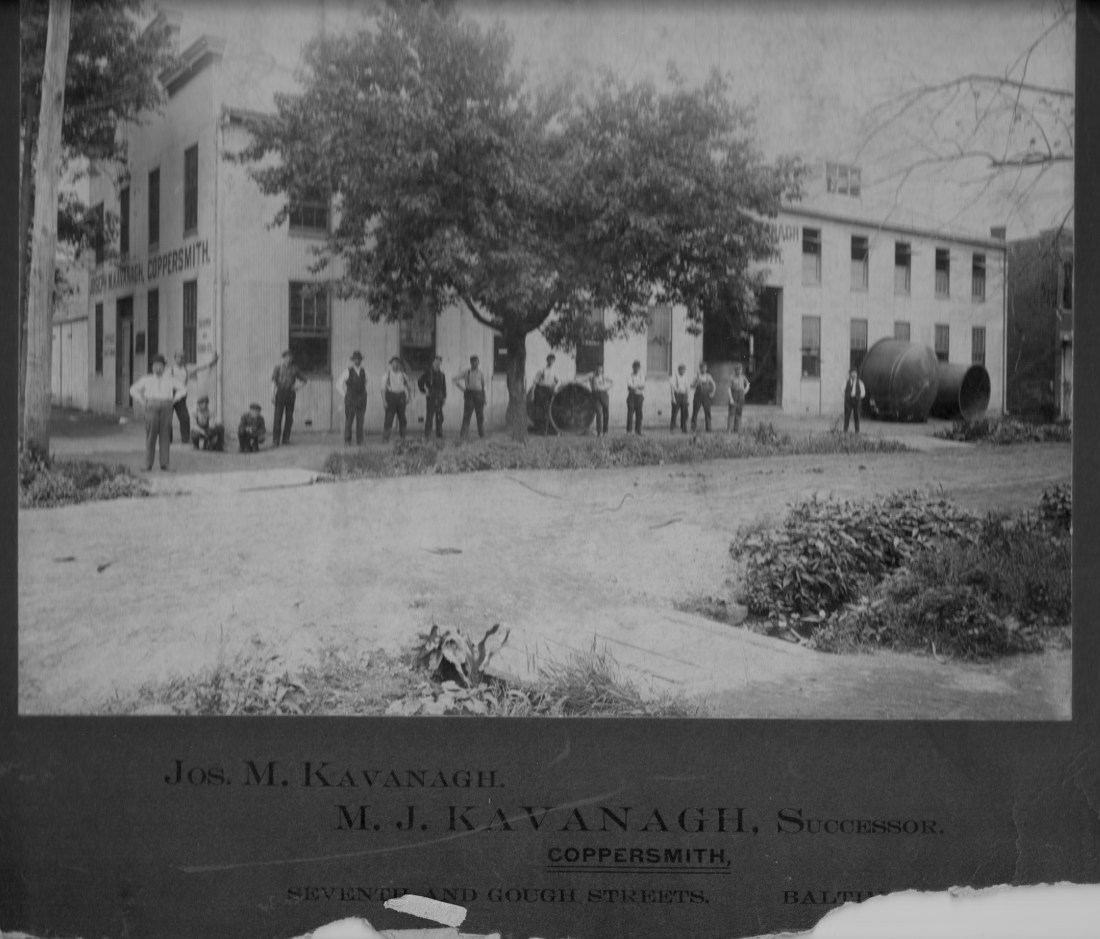
Martin hires a photographer to take some pictures of the 7th & Gough St. building. He intends to use them for promotion. He also has one taken for Kavanagh-Ward Brass. The brothers and workers line up for pictures. Most seem amused by it. Joe is a bit disturbed by it. Joe is one who loves to have his picture taken, certainly. In his mind though, this is wasteful. If they are still “cash-poor” as they say, he thinks this is a frivolous expenditure. Martin sees it as an investment for the future.

Kavanagh Coppersmith (1)
A business postcard from 1905. 7th & Gough St. The Firm of Joseph M. Kavanagh, Martin J. Kavanagh, Successor.

June 16

The steamship work arrives on schedule. Joe making calls and arranging the jobs. It’s still not at the volume of past summers, but the work is welcomed. Kavanagh-Ward Brass gets the brass and the Shop does the ballast chambers. A few jobs come in in a flurry. Martin is quite pleased. The Shop and the new business are both busier and the cooperative work seems to be a good thing. The younger Kavanagh boys, James and Frank, do work for both. James makes drawings for both and Frank uses his smithing skills for both. The building at 7th & Gough is alive with heat and hammering finally.

July 25

Mary Long, Johanna Kavanagh’s mother, dies. She passes within a few months of her husband. This is relatively common. Johanna is saddened and she, Joe and their children grieve. The Kavanaghs as a group pray for them and they mourn together as they always do.

August 12

Frank Kavanagh weds Augusta Snyder. Another Kavanagh brother takes a wife. His brothers and the family celebrate.

August 21

The Shop receives a very big job. Their first substantial distillery job since Uncle Joe’s death. Martin and crew have been contracted to design and build a complete distillery. The building will be erected by a construction firm, but the Shop will handle all design, fabrication and installation of the stills at the Gwynnbrook Distillery. James will take on the large task of making all necessary sketches and drawings. The company is still being sorted out financially, but the contracts have been awarded to build this large facility on Owings Mills and Gwynnbrook. The plan is for it to be up and running by February of 1906. Today some small still parts are made and Frank has several men with him at Globe Brewing. They are soldering leaking seams in large vessels. The usual job of climbing up into a tank and running a bead along the seam to stop the leak.

September 11

The Shop has a few jobs. Enough to keep them happy as they prep for the Gwynnbrook job. Joe is a little bothered today as Martin, again, is a no-show. Perhaps, out looking for work again. Nonetheless Joe wanted to speak to his brother about purchasing the copper block and sheet for this job. He wants to place an order soon. Martin has told him to hold off for now. Martin does not want their cash flow hurt by buying material too soon. Joe, on the other hand, is worried that the longer they wait it might run the job too late into the winter. They can always use the work in winter, but weather may impact their schedule. It’s unpredictable. Better to get at it while they can. Then again, Martin is the boss. Joe does do the books and knows their accounts pretty well, but Martin tells him they need to be careful with their cash.

September 28

A small copper fountain is bent and the holes drilled at the Shop. A nice little job for the crew. It will be installed by E. J. Codd Fab. One of their long-time customers. Also, today James finishes all the necessary drawings for the Gwynnbrook Distillery. He lets Joe know and is surprised when he’s told the material is yet to be ordered. Being in agreement with him, Joe can only tell him to take it up with Martin. Joe stays late tonight. He takes a closer look at the books. Their cash does not seem as bad as Martin thinks. It is not great. Certainly not like it was Pre-Fire, but not as dire as Martin infers. One thing that strikes Joe is that there are some discrepancies between quotes and billed prices on several jobs. When he brings it to Martin’s attention, Martin waves it off as “giving a break to customers” and using it to build for more work down the road. Joe is accepting, but does not agree with this approach. They have to make a certain amount of profit on each job. If not, why bother doing it?

October 7

On this Saturday, Joe takes a train after a half-day of work to D. C. He is attending a double header at American League stadium. The Washington Senators vs. the Philadelphia Athletics who are managed by his old friend, Connie Mack. Mack, now retired as a player, has grown into a successful skipper. This is the last weekend of the season and his club is on its way to the World Series. Joe visits with him between the two games. Unfortunately, the A’s lose both. It’s no matter as the pennant is already won. They catch up and Joe tells him of the changes at the Shop post fire. Though Joe is always one to talk, today he is much more interested in hearing Mr. Mack’s thoughts on his team. He is confident going into the World Series and tells Joe so. They have a good balanced team. Good pitching and good hitting. Unfortunately, Mr. Mack will be disappointed as the A’s lose the Series to the NY Giants who are still managed by former Baltimore hero, John McGraw.

October 18

The Shop’s crew are building another tank. This one is a 500 gallon “low wine“ tank for Maryland Distilling. “Low wine” refers to the first pass of alcohol in the distilling process. Usually, this liquid is passed through the system several more times to increase its potency. The tank will be used for storage. Another nice job. Along with some small kettles it makes for a busy few days. James and Joe have a meeting with Martin. They both push Martin to purchase the copper for the Gwynnbrook Distillery job. Martin is still concerned about putting the money out at this point. Joe remains calm, but James gets a bit angry. He wonders why he worked so hard to finish the drawings so fast if the job is in a holding pattern anyway. He explains that he did some of this work from home. He’s upset that he may have just wasted his time. Martin’s stance is firm. He will give it more thought and buy the material soon. He promises. Joe and James have no choice, but to accept Martin’s decision.

November 1

At long last, the Shop places its large order for copper block and sheet. Martin is absolutely sure that this will have no effect on the job. Joe does not agree. He is of the mind that winter weather could cause delays and hold up the project. However, he is glad that the material is on its way as they need the work. Today all they work on is several cooking vessels. The typical commercial kettles and pans. At the end of the day, Joe sits at his desk and looks out into the Shop. He is watching Martin and two of his friends run another load of rye in the still. They have a few drinks while doing so. Joe makes note of it, but says nothing.

December 24

The Shop’s year will end as it began. The company is not busy, but for the Gwynnbrook Distillery build. They have received their material and are proceeding. It’s a big project. Joe is worried though as they can not get by on one big job alone. They must have that combination of larger orders and the small ones. He knows that times are tough and they may have to just take what they can get. Martin has told all three of his brothers that he can not increase their wages as promised. The Shop just does not have the cash to return everyone to their prior salaries. Joe, James and Frank are not happy. They can see there is not much work, but they do need more money. They resolve to stick it out. Martin asks for just another six months to get the company rolling properly. This Christmas Eve is a Sunday. After a day at church and with family, Joe and the Kavanaghs meet on the Lombard Street bridge. He sings “O Holy Night” per his tradition. This time without his Primrose Quartet friends. He sings into the chilly air to honor the holiday. He has agreed to join Martin for a drink at a local watering hole afterward. He arrives and Martin buys a round of whiskey for all. Joe sips his Maryland Rye while Martin begins holding court among his friends at the bar. A second round is ordered by Martin though Joe is still nursing his first. Martin moves about the crowd laughing and joking with his pals. He’s dressed in a fine new suit while toying with Uncle Joe’s gold watch which is now his. Joe watches silently. A third round is ordered by Martin as Joe finishes his first. Joe says an uncharacteristic quiet goodbye and Merry Christmas to Martin and his friends. Joe walks home deep in thought. He thinks through the events of this year at the Shop. Also, the events of the last few minutes. He is troubled. He is no longer sure he can trust his older brother.


Theodore Roosevelt is the President of the United States. Franklin Delano Roosevelt marries Eleanor Roosevelt. She is given away by Teddy Roosevelt. 31 people die during a large Chicago Teamsters Strike. Las Vegas is founded. The Seattle Metropolitans become the first American hockey team to win the Stanley Cup. Juilliard is founded as the Institute of Musical Art. Joseph Cotton, Henry Fonda and Howard Hughes are born.

There remain 45 states in the Union.

20171019_151812
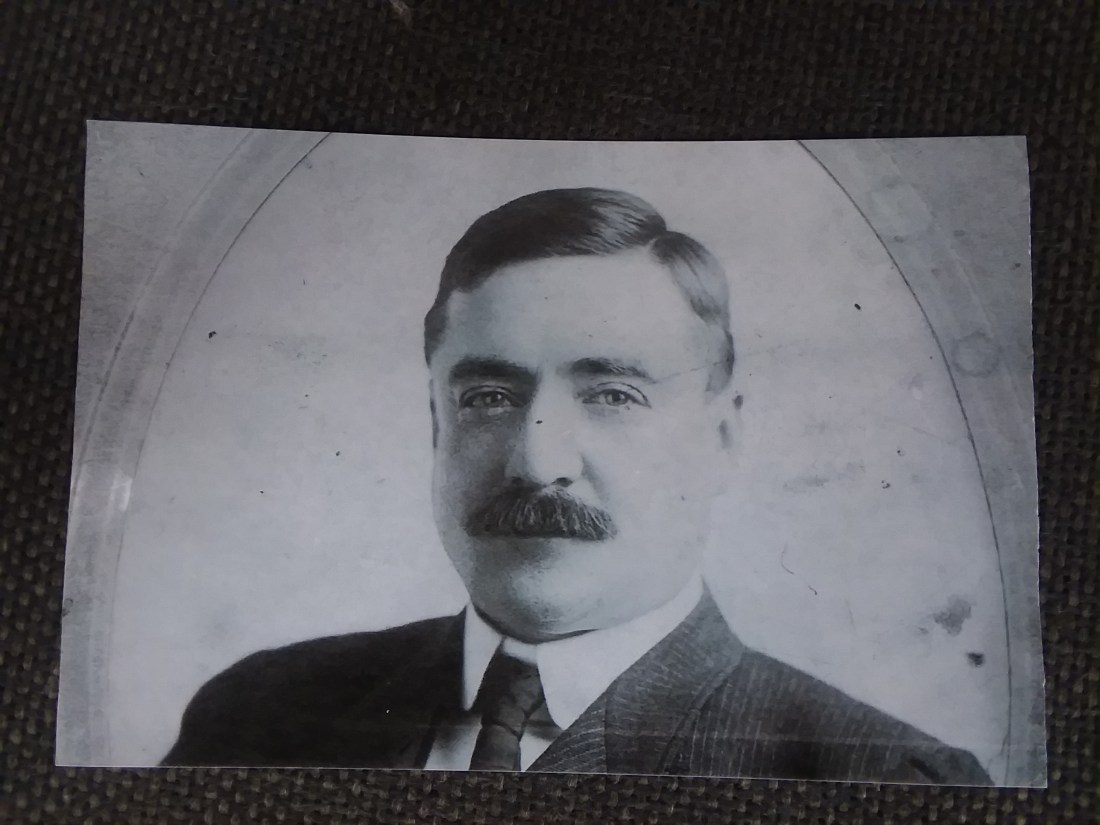
Martin J. Kavanagh, Joe’s Successor. Circa 1900.


https://theshop-ahistoryofthejosephkavanaghco.com/table-of-contents/
Joseph Michael Kavanagh

Joseph Michael Kavanagh : Founder of the Joseph Kavanagh Company

Old Uncle Joe as he is known by the Kavanaghs was born on January 10, 1836 in New Ross, County Wexford, Ireland. He traveled as a teen with his mother, two brothers and a sister to America. The Kavanaghs settled in Baltimore in the early 1850s. First living at Center Market then for over thirty years on Albemarle Street. When he came of age, he began training as a coppersmith. He even took a trip to France to learn about the French Column Still. A new innovation in the distilling industry. Joe became a very accomplished smith.

On April 9, 1866, he partnered with George Smith to form Kavanagh & Smith. A coppersmith Shop. The precursor to the Joseph Kavanagh Co. In 1868, the Black Friday Flood destroyed their stall at 1 W. Falls Ave. He and his partner continued. They quickly moved to 708 E. Lombard Street. They made household items at first such as pitchers, pans and cooking kettles. They also made fountains and did repairs for steamships. Soon, Joe began to tinker with the Continuous Column Still that was becoming more and more popular with distilleries. They began making and repairing these stills. In 1877, Joe bought out George Smith and became the sole owner. Word of the quality of Joe’s work began to spread and they became big players in the distilling industry. Producing and servicing stills and associated apparatus for customers up and down the east coast. He hired more men and expanded. Several of his nephews began working for him and he trained them in the trade.

When he married, it was late in life at the age of 40. His wife, Mary (Doyle), died two years later in childbirth. The baby died, as well. A little over two years of happiness with the woman he loved and that short span of her pregnancy to be a father. That’s all he got. Happiness seemed to allude him, but he persevered. He was certainly heartbroken and perhaps that is why he never re-married. He threw himself even more into his work and business. He began reading about a statue that would be built in New York. A huge copper structure. The Statue of Liberty. He took some time away from the Shop and traveled to New York. He stayed with one of his brothers and sought out work on Liberty. He was disappointed to learn that the coppersmith work was completed in France. He was undaunted. With no coppersmith work to be done, he took a job as a laborer/rigger. He helped raise the sections of the statue until they were placed and mounted. He was very inspired by the idea of this colossus and what it stood for. It meant quite a bit to him to be involved. He never forgot where he came from and that he was an immigrant in this country.

In his later years, he devoted himself to establishing his business and insuring its future. Thus insuring the future of his nephews The Shop began producing beer brewing vessels and vats. Joe and his crew worked for many of the local breweries before and after the turn of the century. There were five nephews who worked for him at one time. He was very close to his family. He loved his nephews as if they were his boys. Of course, he did work with them and teach them. They shared a strong love and a comaradarie. He was deeply religious too. A devout Roman Catholic who attended church regularly and was involved in his parish, St. Vincent De Paul and later St. Elizabeth’s. Though an expert on distilling, he was not in any way a big drinker. He would enjoy a glass or two of rye whiskey certainly, but rarely more than that. As the Joseph Kavanagh Company prospered and grew, Joe gave thought to its future. I’m sure he dreamed of the Shop being a source of support and employment for his nephews and beyond.

The last two years of his life would surely shake that dream to the core. One nephew, Eugene, was killed in a train accident in 1903. He was returning from taking measurements at a distillery in Conn. The following year the Shop was destroyed in the Great Baltimore Fire. Joe and the surviving nephews stood on the East side of the Lombard Street bridge and watched the building burn. They saw it all quite literally go up in smoke. Uncle Joe watched everything he worked for come crashing down. He was devastated, but not destroyed. The next day he met with his nephews and made plans to move forward. To keep the Shop going. He acquired temporary premises and they went back to work. Sadly, Joe died on Dec. 4, 1904, about ten months after the Fire. He had no assurance that the business would continue. They were still very much in doubt. Their recovery would take time as would all of Baltimore’s. Joe died not knowing if what he worked for and built in his lifetime would last. He wasn’t sure it would make it through the next winter.

As we all know, the Shop does go on. Old Uncle Joe becomes nearly a mythical figure in the annuls of the Shop. His skills were legendary and though I am not saying they were exaggerated. I am saying that his presence and abilities became almost super-human in our eyes. I remember well when I was a teenager working here, we were doing a job that was tough. A tricky one. I recall my father saying matter-of-factly, this is a tough one. We could use Old Joe right now. I saw my uncle nodding very knowingly as he listened. Joseph M. Kavanagh had a reputation. He lived up to it. The reputation out-lived him. It did help to inspire those generations that followed. Joe becomes a strong figure representing hard work, great skills and determination. He NEVER gave up. He fought a flood, depressions, fire and death. He NEVER gave up. Those that follow have no choice but to try to measure up. Many of the dates and deeds of this man were lost to memory. Even the date of the Shop’s beginning was lost to time until I discovered it early this year. A combination of research and oral history are what we have left to build his story on. And, of course, that reputation he had.

I can’t help but wonder what his thoughts would be today. We still exist. The Joseph Kavanagh Co. celebrated its 152nd Anniversary in April. My great-grandfather, Joseph Anthony Kavanagh, was Old Uncle Joe’s nephew. The Shop has passed from my great-grandfather to my grandfather and his brother, to my father and his cousin and finally to my sister and I. We are in Dundalk now, but spent over 90 years on the corner of Pratt & Central. That building still exists. Still with our name on the side. We are no longer coppersmiths, but we still work with copper occasionally. We bend metal of almost any alloy now. It is not the same as what Uncle Joe did, but it is not all that different. He worked here for 38 years. I’ve worked here for 38 years. His nephews worked for him. My nephews work for me. I am named for Uncle Joe. In many ways, he is my hero. Though there have been several Joes, I am the first Joseph Michael since Old Uncle Joe. Sometimes history repeats itself whether by accident or intent.

Joseph Michael Kavanagh

20180502_003557.jpg
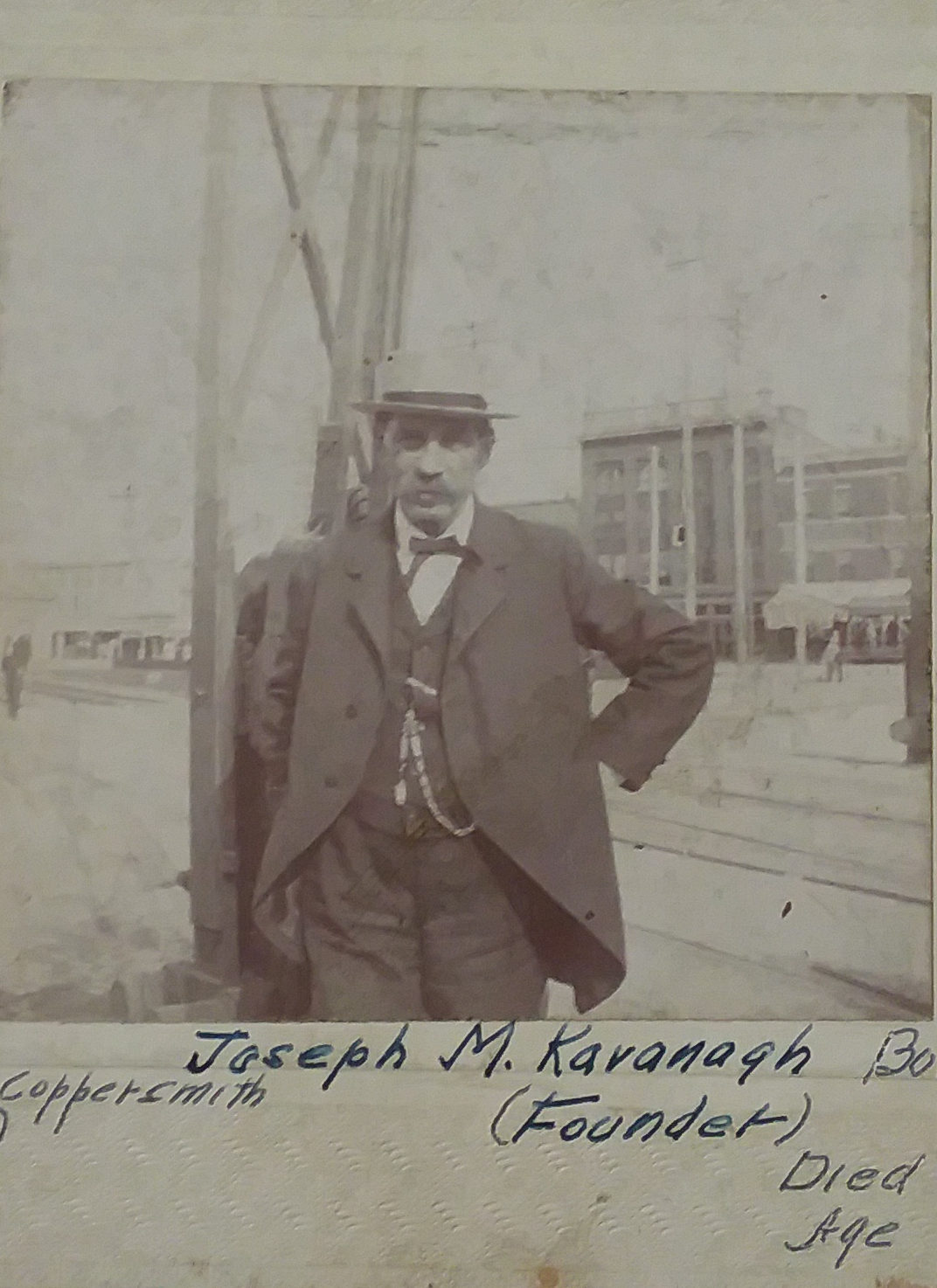
Joseph M. Kavanagh. (1836-1904) Founder of the Joseph Kavanagh Co. Picture taken 1890s.


https://theshop-ahistoryofthejosephkavanaghco.com/table-of-contents/
1904 Fire and Death

January 11

Another year has begun at the Shop. Their winter work for ice cream and candy companies fills the place. Joe and his nephews are still grieving for Eugene. When you work with family and there is a death, it’s almost doubly difficult. You miss the brother or family member, but you also miss the co-worker. Someone you spent your day with. Someone who did what you do and you labored together in the same place. The surroundings and familiarity bring back the memories almost daily. They do their jobs with their missing comrade in their thoughts.

February 7

This Sunday finds the Kavanaghs at St. Vincent’s for mass. What happens next will change the Shop forever. The next 24 hours will bring an end to the golden age of the Joseph Kavanagh Co. In this short time, everything changes. The glory days of the Shop end today. At approximately 10:30 am, a fire starts at the John E. Hurst Company near Hopkins Plaza and Liberty Street. A tossed cigarette that fell through a grating into the basement is the assumed cause. The Great Fire has begun. An alarm is called out and firefighters respond. A strong wind inhibits their efforts. The Fire engulfs the building quickly and by noon, an explosion blows the roof off. Sparks start flying and several more buildings are set aflame. Quickly, the Fire gets out of control. More and more firefighters and police respond. Calls are made out to Washington D. C. and any nearby fire departments. The help is needed. When the D. C. firemen arrive with their equipment, there is hope that the Fire can be stopped. Confusion and frustration wipes that away as there are issues connecting the D. C. fire hoses to the Baltimore hydrants. The connecting fittings are different. They are forced to stuff cloth in the fittings in an effort to make them fit snug. It works somewhat but greatly reduces the water pressure. Second stories and roofs are unreachable as the Fire spreads faster and faster. Destroying as it goes. The wind driving the flames northward. In the early evening, firefighters try dynamiting buildings to halt the Fire’s path. This is unsuccessful as sparks keep flying and the Fire keeps moving. Word of the fire spreads just as fast. Citizens are shocked and frightened. The Kavanaghs are no different. They have much more at stake though the Shop is not in the Fire’s path. Uncle Joe and the nephews sleep as best they can as the City continues to burn. They plan to go to the Shop at first light and hope that it is safe. Overnight the wind changes and the Fire starts heading East then Southeast. The wind gusts and several smaller fires begin from blown burning wood brands. These soon merge and enhance the inferno as it now moves toward Pratt and Light Streets in the early morning hours of Monday. Next in the Fire’s path is Lombard Street.

February 8

Joe and his nephews arrive at the Shop early in the morning. The Fire is raging and the wind is driving it. The police and firefighters are insisting that they leave the area. The Kavanaghs are trying their best to save or salvage tools. This scene is repeated throughout the neighborhood as business owners try to keep safe what they can. Soon the police tell the Kavanaghs they must leave. All non police or fire personnel are ushered to the other side of the Jones Falls across the Lombard Street bridge. The Fire is coming. Smoke billows and fills the air. Joe and his nephews stand with the onlookers. The Shop is just a block and a half from the bridge. The Kavanaghs have a good view. The Fire reaches 708 E. Lombard Street and quickly engulfs it. The wind is feeding the Fire. The Shop’s building timbers burn very fast. The smoke is thick and they lose sight of much of the Shop. They stand silently and watch the building be consumed. All they can see is black smoke and the licking of flames that occasionally breaks through. Uncle Joe squints his eyes and stares dumbstruck. The building is a mass of fire and smoke in a matter of moments. The Fire continues to spread. The hope is that the water of the Jones Falls will put a stop to it. The heat gets closer and closer as the Fire continues on its path toward them. With temperatures reaching over 1000 degrees in the heart of the Fire. The Shop is almost completely obscured when it goes down. The wooden frame gives way. The building collapses in a few quick seconds. The Kavanaghs watch their livelihood, their past and their future drop in a mass of rubble. For Uncle Joe, it all disappears in a few fleet seconds. It is over. The Fire is finally quelled by 3 pm. Over 30 Fire Steam Engines pump water from the Jones Falls to stop the flames at the bridges. Some smoldering embers burn for weeks. A black cloud covers Baltimore. And the Kavanaghs. The Shop is gone. She has fallen.

February 9

Uncle Joe has spent a sleepless night thinking of the Shop. His dream for the future, his legacy for his nephews is all gone. He grieves, in a way. The Shop has not just been his business. It’s been his companion, his partner for many years. He has spent countless hours there. Toiling. Sweating. Smithing. It’s all he knows. The Shop is his life really. It is hard for Joe to even accept. He won’t accept it. He calls his nephews to meet at his home. They gather and Joe tells them they shall carry on. He will find a way to get another building. They will do as they have done. The nephews listen as Joe very deliberately commits to their future. He’s an old man. He knows the Shop is no longer for him. He knows it is for the next generation. He will spend the money to find new premises. He will find a way to keep all of their jobs. He assures them that he will do what is necessary. All four promise to follow his lead. To help in anyway and to work as hard as is necessary to save the Shop. Building be damned.

March 10

Joe Kavanagh acquires the rights to rebuild property on Hawk & 7th Streets. The construction begins immediately. The nephews and crew work hard to build a new Shop. It’s a small parcel of land behind the old building. It will serve as a temporary facility until they can get back on their feet. Then, Joe will find better permanent premises.

March 20

James McCarthy who was married to Alice Kavanagh, one of Joe’s nieces, is wandering through the rubble that is all that is left of 708 E. Lombard Street He discovers something strange. In the mass of debris is a silver spoon of all things. It was blackened with soot. After examining it , he realizes it is a part of a set that was given to him and his wife at their wedding. Alice had died several years prior so the finding of this spoon is both bitter and sweet. As it turns out, Joe had borrowed the spoon and not returned it. He had borrowed it from his sister-in-law, Katherine, many months before. Katherine was James McCarthy’s mother-in-law. The set of spoons had been kept at Katherine’s home. Joe lost it and then forgot about it. When James McCarthy tells Joe, he recalls it, but can not imagine how it found its way to Lombard St. The spoon, several hammers and some very dirty copper block are the only things salvageable after the Fire. The story of the spoon is so odd it is reported and printed in the Sun as the “Spoon of the Ruins” on April 2nd.

March 23

The Shop is back in business that fast. Hard work and Joe’s investment have opened the place up. The first job they receive is from Laurer and Suter. One of their regular confectionery customers. A peanut kettle and some associated tubes and apparatus. It’s a welcome sight to Joe. Both Joes. The younger Joe takes the call and his brothers get to work. They are only able to retain about half of their crew. Twelve men including Old Uncle Joe. The money isn’t there to keep the rest. They also have no idea what volume of work will be out there. Most of their local customers were affected either directly or indirectly by the Fire. Business with their out-of-state customers will have to be put on hold for a bit. Travel and commerce in and out of Baltimore is limited until the City is set back in order. Also, the trips to bid these jobs cost money. After buying the Hawk Street property, Joe must be a little cautious with their funds. Still, they are pleased to get started again. A peanut kettle is a good place to begin. They heat copper sheet and roll it into a cylinder. It is tinned and soldered shut. The bottom is attached and the lid made. The rest of the system is fabricated as well. Same as they always have done. Other jobs come in quickly and they have a fair bit of work to begin the short-lived Hawk Street days.

April 19

Joseph A. Kavanagh receives a call from Horsey Distilling. The Shop gets its first big still fabricate and install job from one of its oldest local distilling customers. Uncle Joe is relieved. These larger jobs can keep the place busy for several weeks. The small stuff is good and a mix of both is ideal. This one will help them on their recovery. Martin and James are dispatched to make sketches and take dimensions.

June 1

Things have picked up a bit, but Baltimore is still in its own recovery. The Great Fire was the largest fire in the country since the Chicago Fire of 1871. Approximately 1500 buildings were destroyed. The Fire raged for nearly 30 hours yet, miraculously, only one person died as a direct result of it. It was a devastating blow to the growing and expanding city that was Baltimore. After the Fire, citizens and the City government work together in an impressive display of solidarity. The destroyed sections of the City are cleared and cleaned as quickly as possible. People get back to work. They rally round each other and pitch in to help. A welcome return to some sense of normalcy comes quicker than anticipated. The Shop is back up and running . Making kettles and copper vessels. They receive their regular Summer steamship work. Repairs and replacement ballast pumps. Joe feels better. He’s confident he has done the right thing. He is unsure of what success they can find in their new home. He will ride this out and do his best to set his nephews in the right situation. As always, he hopes for better days.

August 16

The new smaller Shop on Hawk Street receives its first out of state order. They have not been in a position to bid these jobs as yet. After several months of establishing their new premises, Martin and Frank were able to travel to PA and take all the appropriate measurements. Uncle Joe worked up the quotation for the bid and the younger Joe did what he does. He called the customer and sold them on the Shop’s price and even more so on its quality. He assured them that even in the new building they still have the highest of standards of workmanship. They begin today on the still. Most of the crew assigned to this one project. They make the column still, the fittings, drip pans and assorted parts and apparatus that is necessary. Suddenly, it almost seems like the old days.

September 7

The Kavanaghs have stayed busy through a hot Summer. Nephew Joe taking calls and conferring with his uncle on prices. Then the other nephews and workers completing the jobs. Today, Joe grows ill. He has been feeling tired and rather weak lately. His nephews take note and convince him that he should go home. He does so, but feels sicker that evening. The doctor is called and an exam reveals some heart issues. This explains the weariness, but essentially Joe is old. The doctor is frank. He encourages bed rest to regain Joe’s strength. He offers no long term solution. The family is very worried. The nephews and the rest of the family confer. Eugene’s widow, Mary, offers to take Joe in and care for him. This seems like a good arrangement. The nephews are grateful. They know Mary Kavanagh will take good care of Joe. They hold out hope that he will recover. They prepare for the first day in a long time without Joe at the Shop.

October 17

Things are moving smooth enough. The boys have stepped up and the Shop rolls along. Frank and a helper are at Weissner’s Brewery soldering some seams in their beer vats. The remaining crew are making several cooking jacket kettles and small fittings and parts for a boiler repair. They speak of Joe and continue to hope he will be back. It is starting to seem less likely. It is a quiet Shop lately. Even their usual distraction of baseball disappoints this year. They lost their beloved Orioles last year, but still follow the game closely. This season ends with no World Series. The Boston Americans win the A. L. pennant. The New York Giants take the N. L. Giants manager and former Oriole John McGraw refuses to face the Americans. He declares that by winning the National League, the Giants are already champions. The rivalry between the leagues has grown bitter quickly. Fueled by animosity between McGraw and A. L. president, Ban Johnson this time.

November 8

Teddy Roosevelt defeats Alton B. Parker to retain the Presidency. The Kavanaghs most likely voted for him. He was a very popular incumbent. Uncle Joe is getting sicker now. He keeps to his bed at Mary Kavangh’s home on Baltimore St. The nephews visit him regularly. Doing their best to do what he would do. They talk to him about the work they have and pick his brain from his bedside. When Joe is able, he answers any question and advises accordingly. He knows it is still part of his job. He is still Joseph Kavanagh. To answer or assist even to the end is in his nature. It’s the job. As he grows weaker, he can do this less and less. His thoughts were his own in these last months. I try to imagine his state of mind. He has worked at the Shop for 38 years now. More than half his life. He devoted himself to his craft, his business and his family. Finding a way to tie all of those things together. He watched it all crumble in one terrifying moment. He has done enough to restart the place, but he has no idea if it will last. It has only been seven months and winter is coming. Will they make it through the cold and will the work be there? The question he asked himself so many times in his life. Will the Shop make it through the winter? Joe will never know the answer.

December 4

Joseph Michael Kavanagh dies. He passes quietly in his sleep. The family gathers to mourn. He was 68 years old and had outlived all of his siblings. He was the patriarch and leader of the Kavanaghs in so many ways. Most importantly, he was the man responsible for the livelihood and security of his Kavanagh nephews and their families. He, also, was the elder gentlemen who helped and advised the family. He assisted with money, but also with faith and trust in them. What greater example of that than to have put so much of what he had back into the business. Knowing that it would not be for him. It would be for those that he taught. Those that he worked with. Those that he loved. And all those who would follow. The Kavanaghs pray for their fallen uncle and leader. They take solace in their faith as he would have done. They take strength from each other and the bond they have. Joe is buried at New Cathedral Cemetery near his beloved mother. The family is overwhelmed with grief, but they will carry on. The Kavanaghs are all of the new generation now. The generation born here in America. No longer immigrants, but the children of immigrants. The nephews vow to work as one and to keep the Shop alive. For Joe is dead. Long live Joe.


Theodore Roosevelt is the President. The Panama Canal construction begins. Cy Young pitches the first perfect game in Major League Baseball history. The ice cream cone is invented in St. Louis. In San Francisco, the Bank of Italy is founded. It will eventually become Bank of America. The first New Year’s Eve celebration is held at the newly re-named Times Square. Dr. Seuss, Glenn Miller, Robert Oppenheimer and Count Basie are born.

There are still 45 states in the Union.

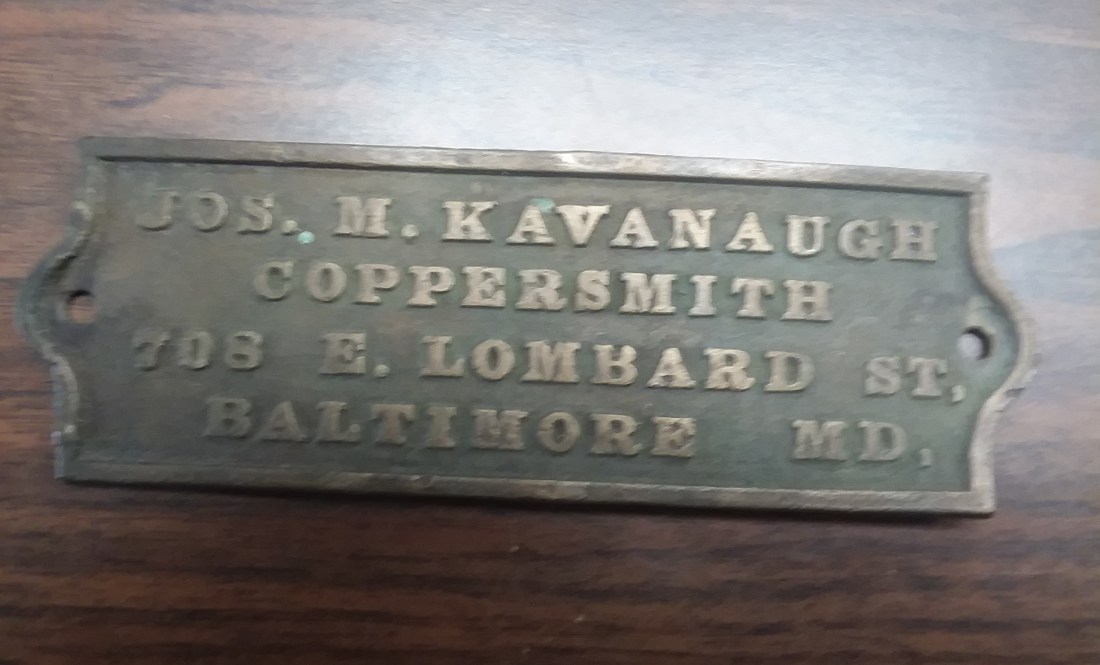
The misspelling may be why this label was saved. It was put aside due to the spelling error & kept at Joe's home.
Brass label or stamp that was used to identify large kettles or vessels made by the Joseph Kavanagh Co. Note the misspelling.

1903 The Train Crashes

January 12

A cold Monday to start a cold week. So far, the Shop is doing well. The usual winter swathe of candy and ice cream companies needing kettles repaired and replaced. Joe and his crew hammer and heat copper as they always do. January is a good month for torch work. The workers are a bit down as the City of Baltimore received some bad news. The Baltimore Orioles franchise has folded. At the end of last year, financial problems forced the league to assume control of the team. Subsequently, the American League decided to shut the team down. A new team will replace them. A team in a much bigger market. New York. The team will be called the Highlanders and eventually become the Yankees. The Kavanaghs and the rest of the crew were very much Orioles’ fans. Now, that comes to an end. No more baseball will mean a part of their summer is gone. It is just a game, but will be missed greatly by the Shop and its crew.

February 9

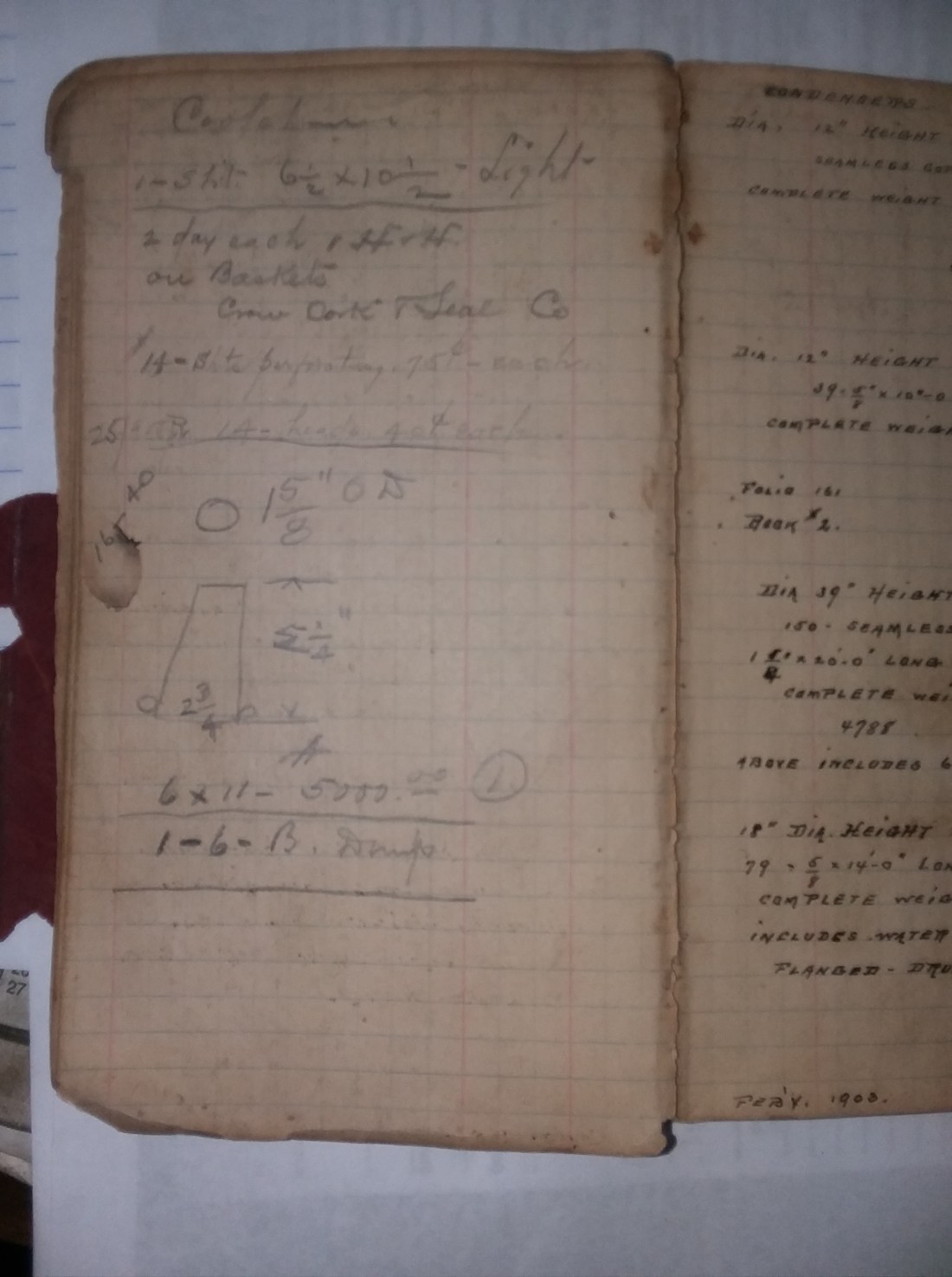
Today the main focus of the workers are some spiral coils. They are made from copper tube which was fabricated by the Shop. The tubes are then curved and spiraled. These are for a food service application. The customer is Crown, Cork & Seal. The Joseph Kavanagh Co. will do work for this company for the next 90 years. Also, Eugene has two gents with him at Brehm’s Brewery. A seam needs to be fixed in one of the large beer vessels. They must climb a ladder up and into the vat. Then go about soldering the damaged seam. An easy job, but for the challenge of not damaging the vessel while working inside it.

20180730_125329.jpg
Entry from Uncle Joe’s last job book. Referencing coils made for Crown, Cork & Seal. 1903

March 30

Martin and James are in Pennsylvania. They are measuring the dimensions of a distillery. In order to properly bid a still, they need to know the size of the building and how high are the ceilings. These numbers are how they design the still to fit and maximize its efficiency. Each large still they make is custom to each distillery. The other fellows are producing some large jacket kettles for cooking. These are always in demand. A comfortable warm Spring day passes.

March 31

James is happy to be back to Baltimore because his first child is born today. Honorah gives birth to a son, John Guy Kavanagh. Another Kavanagh baby brings joy to the family.

May 2

The crew are working on their usual kettles and cookers on this Saturday. Eugene is in Connecticut taking measurements at the Warehouse Point Distilling Company’s building. He left Thursday and was due back last night. He hasn’t arrived at the Shop yet as the morning gets later. Around 11 am, Uncle Joe receives a telegram from A. J. Collins & Co. They are undertakers. There was a train wreck in South Norwalk, Conn. Eugene was killed at approximate 5:40 pm the day before. The Kavanaghs are stunned. They can not believe that this young man, father of five, is gone. Their brother. Uncle Joe’s nephew. The family is thrown into a deep shock of grief and disbelief. James Kavanagh calls the undertaker using the long distance line. They inform him that Eugene was identified by his uncle’s business card which was found in his pocket. Arrangements are made to return the body to Baltimore. Eugene’s funeral is at St. Elizabeth’s Church and he is buried at New Cathedral. He is the first Kavanagh employed at the Shop to die.

July 20

A rush steamship repair is finished today. Four ballast pump-chambers are built in three days. Quite a bit of work in a short time. The Shop has been making these for years so it’s just a question of working harder and longer to get the job done. Frank fixes a leaky valve at Melvale Distilling. Several months have passed since Eugene’s death. The shock has begun to wear off. The brothers were close and it was a blow to them. This tight knit unit missing one of its own. They have each other. Uncle Joe struggles a bit more. Not as a parent, but as close as you can get to one. He was close to Eugene in his own way because of the depth of their skills that they shared as smiths. Eugene was Joe’s prized pupil. A talented coppersmith who learned fast. Joe can only rest on his faith.

September 5

Joe and his boys are busy on this Saturday. James and Frank perforate some copper sheets for Monticello Distilling. Their oldest distillery customer. A straight forward repair. The perforated copper sheets are used as “drop sheets” in the still. Multiple layers of these sift the slop. Hastening the production of the vapors that essentially become the alcohol. Martin is in Atlanta. Another trip to measure a distillery building. The Younger Joe fields a call from a John Guenster. He is supplying cooking equipment for several businesses that are opening cafeterias on site. He orders six- 100 gallon jacket kettle cookers. Those are the biggest they make. The work is still there though not quite at the pace it was two years ago.

December 10

Sharp & Domme orders two percolators. One of several variations of jacket kettles. The Kavanaghs’ standard fare. A fountain project is begun. James and Frank heat and bend some thin copper into tubes. They bend the tubes into rings and drill holes. A careful process to make for a smooth curve. It is just as much their “standard fare”. Pure coppersmith work. Using a blow-pipe(torch) to heat the copper until it glows orange then slowly bending it as you can. The water is pumped through and sprays out of the holes. Pretty straight forward but, laborious. Joe taught them well. He taught them all well. Young Joe, alone, was not a coppersmith. He too learned from his uncle just not the smithing work. He quickly adapted to the business and its services. Knowing much more than what was just necessary for the job. For Martin, Eugene, James and Frank it was different. Uncle Joe spent particular time in each of their training. It was more than apprenticeship. It was tradition and the passing of skills and a way of life. Eugene was a talented smith. He was adept and knowledgeable in both the distilling and beer-brewing industries. He grew up around it all. Around the Shop. Around his uncle. Joe was always proud of all his nephews, but Eugene was his first student as an older man. The span of years between Martin and Eugene is 10 years. In that time, Joseph M. Kavanagh had truly become a master of his craft. The loss of Eugene was very tough for him. There is no doubt.


Teddy Roosevelt is the President of the United States. Orville Wright flies his airplane in Kitty Hawk, N.C. The U. S. gains exclusive rights to the Panama Canal Zone. The first Teddy Bear, the first model A Ford and the first box of Crayola Crayons are sold. Eliot Ness and John Dillinger are born.

There are still 45 states in the Union.

20180730_125026.jpg
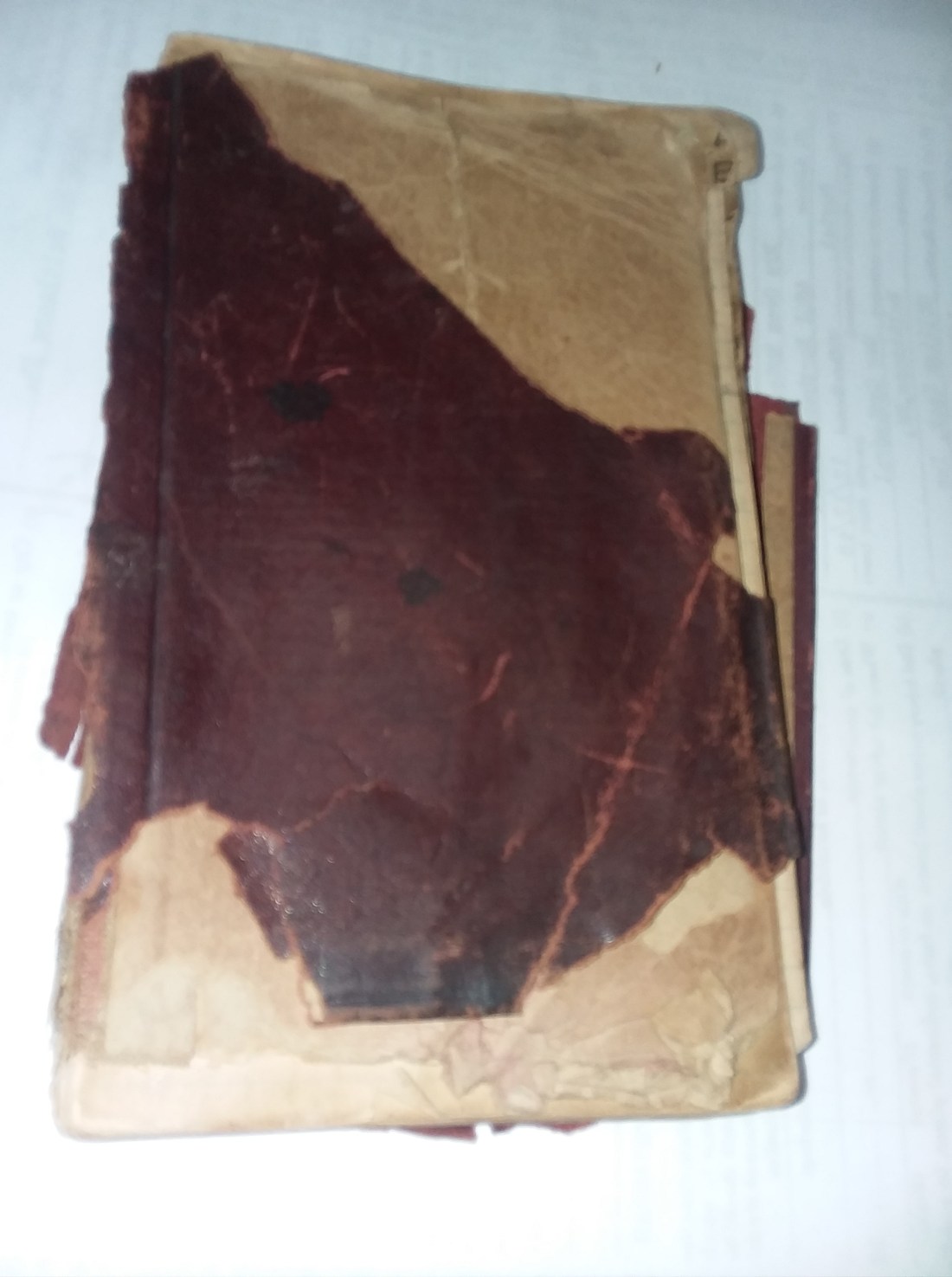
Uncle Joe’s last job book. 1903-1904. This book survives the Great Baltimore Fire because it was small and Joe kept it in his coat pocket.


1902 Patrick

January 8

The Shop keeps rolling along. Confectionery companies need their kettles replaced and repaired. There are several condensers being manufactured for Horsey Distilling. A cold, but busy month to start the year.

February 20

The Kavanagh crew is working on a repair for Weissner’s Brewery. Young Joe phones a Mr. White at Hannis Distilling to quote some work. A pipe they want fabricated to connect to Baltimore Distilling’s storage tank. Martin and several gents are in Cleveland for an installation. Patrick, Uncle Joe’s brother, suffers a stroke. He is at home at 233 Albemarle Street. Joe and his nephews(except for Martin) rush home. Patrick is in and out of consciousness. After several days, he slips into a coma. His wife, Katherine, stays by his side tending to him. The family prays for Patrick, but there seems to be little hope of a recovery.

March 17

Patrick Kavanagh dies. On St. Patrick’s Day, by coincidence. The family mourns deeply for him. Joe is the last surviving sibling of his generation. Both brothers and his sister have passed on. Patrick was a hard working man. A carpenter who worked primarily in ship building. Though he never worked at the Shop, he was Joe’s closest confidante. They were as close as brothers could be. Patrick and Katherine had nine children. Seven boys, two of whom, died in childhood. All five of the other boys work for Joe. As I said, Patrick never worked at the Shop, but having five sons who did is pretty close to working here. His passing was very painful for the Kavanaghs. He is my great-great grandfather. He traveled to America as a teen. The eldest of Alice’s children. He went to work at an early age to help support his family. He was the one that Alice leaned on the most when they arrived here. He married and raised a large family. By now, his descendants must be very close to one hundred people. Joe becomes the patriarch of the Kavanaghs. A heavy burden made heavier by employing the five nephews. Joe is fine with this and gladly takes on any additional responsibility. Mostly, he misses his brother. Patrick is buried in New Cathedral Cemetery with his mother. Many more Kavanaghs will follow.

April 19

The Orioles open up their season today in Boston. Losing to the Americans, 7-6. Joe and his boys are still saddened by Patrick’s passing. They still chat about the Orioles at work as this season begins. Perhaps, a bit less passionately, but they are always fans. The younger Joe seems to be getting better and better at bringing in work, balancing the Shop’s schedule and making sure they get paid. He is a good manager and a terrific salesman. Eugene and Frank are working at Bauernschmidt’s Brewery. Martin and James are installing the condensers at Horsey’s.

May 12

Baltimore’s own, Joe Gans, wins the light heavyweight championship of the world in Toronto.

June 27

Today the Shop receives a shipment of copper block and sheet. The raw materials they use to make the things they make. Most of the day is spent unloading and placing the copper in the back of the building where it is stored. The crew has plenty to do as the steamer work has returned. Also, Martin and James are taking some measurements at Sherwood Distilling. The topic of discussion is baseball.

The Orioles are off to a rough start. John McGraw will be suspended then fired for his on field antics. The aggressive play that his team has used in the past is frowned upon in the new American League. McGraw is replaced by Wilbert Robinson. He won’t be able to save this team from a dismal last place finish.

August 14

A humid day finds most of the Kavanaghs out of the Shop. Eugene is in NY taking measurements for a job. Martin and James are in PA doing the same. Frank and several boys are repairing some beer vats at White Brewery. The rest of the employees are working on some steamship parts and the usual cooking vessels. The two Joes speak as they eat their lunch. The elder Joe passing along some details about their work. In particular, they talk about distilling and rye whiskey. The younger Joe takes note of all he can. His uncle is a font of knowledge if the subject is copper and whiskey.

October 9

The Orioles do, in fact, finish in last place. A terrible year for the team. It will get worse. The Shop works on a repair for Globe Brewery. Plus, they have a fair amount of commercial cookers to make for the growing number of restaurants and eateries in Baltimore. At the end of the day, Martin fills twelve bottles with their homemade rye. Unbeknownst to his uncle or his brothers, Martin has been making a few bucks selling the rye to small pubs. Presented in unmarked bottles. It is a cheap bar whiskey for the less discerning customer.

December 16

The Shop hums along quite busily. Today they work on a repair for Gunther’s Brewery and a decorative copper fountain. Martin and Frank are at Monticello Distilling on a repair job. It’s been a good year, but not their best. Joe is content that they are making money and the volume of work is plentiful. His thoughts are often with his brother now. Patrick is the father of the next generation of his business. While Joe has provided jobs and security for them. They provide a future for his business, for the Shop. Without the nephews, Uncle Joe would know that his business will disappear when he dies. Because of Patrick’s boys, he is able to begin a tradition. A legacy. When the Shop passes to the next generation, it will be merely the first inter-generational step in preserving this old place. It will continue for five generations. The sixth generation works here now. I am their Uncle Joe.

Teddy Roosevelt is the President of the United States. The first Rose Bowl is played between Michigan and Stanford. Two senators from South Carolina have a fistfight while Congress is in session. Texaco is founded. Air conditioning is invented. The Philippine-American War ends. Roosevelt becomes the first president to ride in an automobile. John Steinbeck, Thomas Dewey and Strom Thurmond are born.

There remain 45 states in the Union.

patrick&joejpeg-1
Patrick & Joseph M. Kavanagh( left to right ), brothers. Circa 1900.

1901 The Last Best Year

January 28

The year has begun as last year left off. A lot of jobs and lots to do. Uncle Joe receives his usual work from the confectioners in January. Also, they have their stills and beer vessels to make. A cold Monday is the start of a laborious week. A great deal of their work is very redundant. The same thing sometimes day after day. It is broken up by the occasional odd item. A railing or a fountain, but most of what they do is very similar day to day. The Shop has a good crew led by a wise man. He has done all the things his workers do. He has heated and hammered just as they do. Perhaps, that gives him a more fair perspective of his employees’ jobs than other owners. I do know it gives him an understanding of the challenges his men deal with every day. That’s a good thing and it serves the Shop well.

March 17

A Sunday is spent celebrating St. Patrick’s Day. A large gathering of Kavanaghs on Albemarle Street for a party. Food, drink and music is enjoyed by all. Young Joe sings and coaxes the rest of his family to do the same. The music gene has passed from him to his sons. Leo(8) is learning to play the mandolin while Eddie(7) is being taught the piano by his father. Uncle Joe enjoys the party. He speaks quite a bit with his brother Patrick and Patrick’s wife, Katherine. They talk of the family and how it has grown. Also, how Baltimore has grown and changed. The brothers have lived in the City for 50 years now. The changes have come quick enough to surprise you, but slow enough to watch them happening. They have come so far from New Ross, County Wexford, Ireland. They are Americans now. Though on this day, they do feel particularly Irish.

April 26

This Friday brings back baseball and the Orioles. The newly formed American League Orioles play their first game. They beat the Boston Americans 10-6. John McGraw has returned as player/manager. Unfortunately, several of their better players have been poached by other teams. The fans are excited though. For sure, the crew of the Joseph Kavanagh Company are. They discuss this new league and how well McGraw and the boys will do this year. As far as jobs go, most of the crew are working on several large beer vats. These are for George Gunther’s Brewery and the Spring Garden Brewing Co. The rest are spread over smaller jobs. Pans and jacket kettles. Joe, himself, is working on three copper pitchers for a fellow St. Vincent’s parishioner. Joe has taken to attending to these smaller items. Usually brought in by an individual not a business. These are the things that Joe was doing when he started the Shop. It reminds him of his youth and simpler times. He is 65 years old now, but still a coppersmith.

June 22

A very hot Saturday finishes the week. Martin is in Connecticut to take the necessary measurements for a potential still job. Eugene is in Virginia with 3 boys working on an alcohol storage tank. James and Frank are at Orient Distilling making some drawings for an installation next week. The rest of the boys labor through a very hot day on Lombard Street. What they don’t know is that a historic heat wave has started. The longest hottest heat wave in the U. S. to date. It will last until the end of July.

July 6

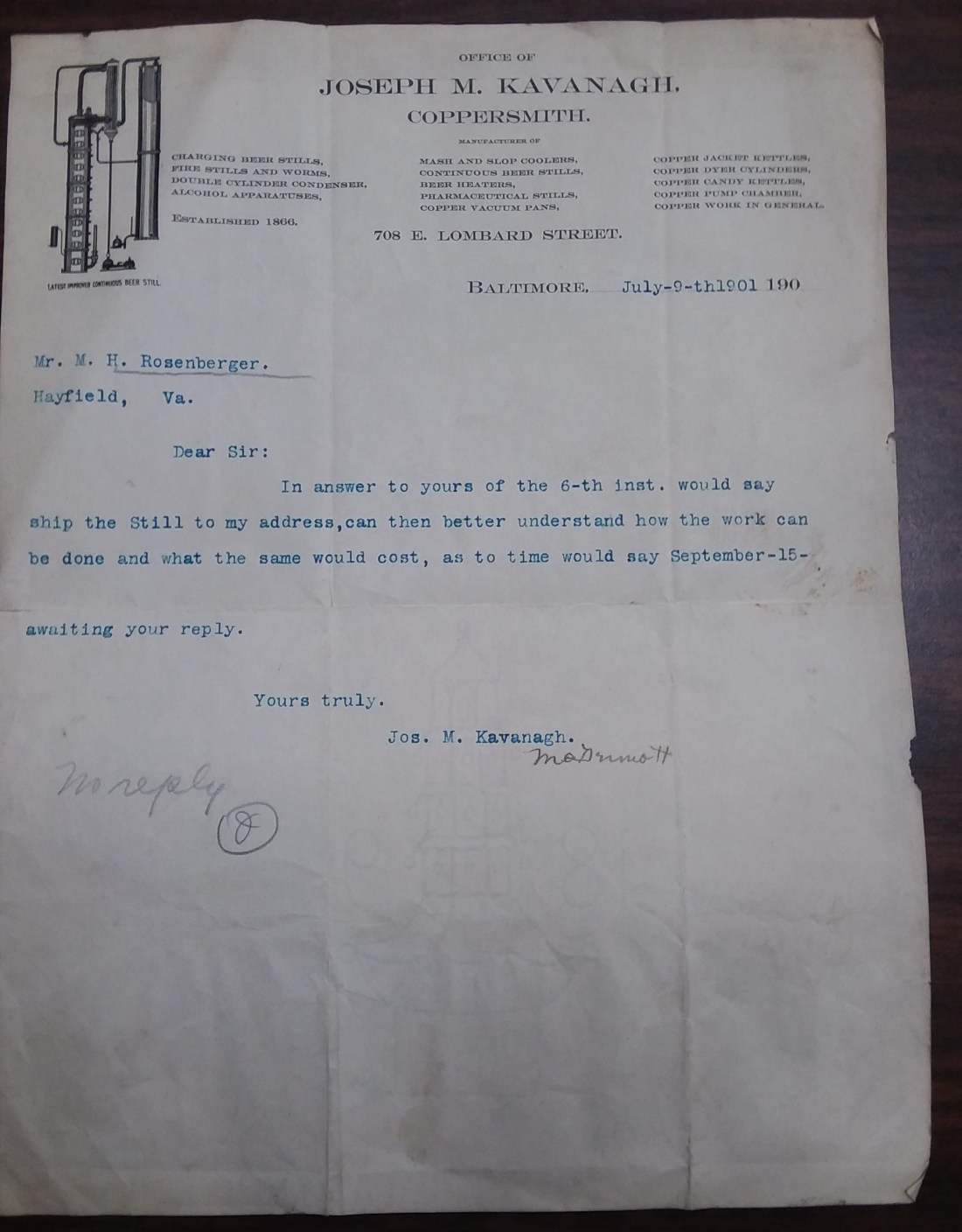
Uncle Joe receives a letter from a Mr. M. H. Rosenberger in Hayfield, VA. Another possible small still repair/replacement. Joe replies to him that the unit should be shipped to the Shop. Better to ascertain what can be done. The still is too small for Uncle Joe to send one of his men. This would just be a “personal use” still. Alas, Mr. Rosenberger does not reply. Uncle Joe’s letter in response is at the bottom of this post.

July 15

Monday starts another sweltering hot week at the Shop. The heat and humidity are oppressive, but the work won’t do itself. Young Joe advises his uncle to have everyone start an hour earlier and knock off an hour earlier. You can get more done in the morning. By the afternoon, the heat wipes you out and the level of production goes down. Uncle Joe thinks it’s a good idea and that’s what they do. It’s not fun to wake up an hour earlier. It is a little cooler, but not much. Still, at the end of the day when you are heading home an hour earlier, that is a good feeling. They adjust the work schedule until things cool off. Most of this week is spent on steamship repairs. They have a flurry of them and must keep to a tight schedule. The pump-chambers, stacks and miscellaneous must be finished boat by boat as promised. As one is ready, it is delivered in the Kavanagh cart. Then, another boat’s needs are assessed. Each steamship taken care of one at a time.

August 1

The new month brings a much needed break in the heat. Finally, the temperature will allow the Shop to return to its standard hours. Young Joe is relieved. He hates the heat. He sings through the building as is his wont at times. Martin is in Alabama taking a look at a distillery that could be another customer. Eugene has a crew at Brehm’s Brewery fixing some leaking beer vats. Those left in the Shop are building another 40 gallon still and a complicated fountain. The fountain is irregularly shaped. Most are circular, but this one is more ovular. It takes more time, but it’s certainly within their abilities.

September 6

President McKinley is shot in Buffalo, NY by Leon Czolgosz. A self-proclaimed anarchist. The news hits the Shop late in the day. Joe and his crew are stunned. McKinley survives, but is gravely wounded. The Kavanaghs, like most Americans, pray for the life of the president and for justice against his attacker.

September 14

President William McKinley dies on this Saturday. Theodore Roosevelt succeeds him as President. The Kavanaghs are saddened. Uncle Joe sends his crew home. A national mourning begins.

October 7

The Shop’s crew are all over the place today. Martin, James and 3 others are in NY installing a still. Eugene and 6 men are in Richmond, VA repairing a storage tank. Frank and 2 of the older workers are at Wiessner’s Brewery in Highlandtown doing some repairs. The remaining fellows are fabricating some drip pans and smaller distilling items. The work keeps piling up and there seems to be no end in sight. The Kavanaghs are disappointed this year as the Orioles settle for a 5th place finish in their first American League season. The Chicago White Sox win the AL pennant. The Pittsburgh Pirates the NL pennant. A planned championship series between the two leagues is canceled. The two leagues are in dispute about player contracts and money. There is no world champion of baseball this year.

November 23

James Kavanagh marries Honorah Divine. A wedding is always a cause for celebration. The family are happy to welcome her into the fold.

November 28

The Kavanaghs celebrate Thanksgiving. Like most Americans, a grand feast and a gathering of family. They meet at Patrick and Katherine’s home on Albemarle Street. A day devoted to expressing gratitude for the gifts and good fortune they have received. Uncle Joe is happy to be with his family at his brother’s house. He certainly has a great deal to be thankful for. The Shop has again had its best year. The company is continuing to expand its area of customers. They range from Georgia to Connecticut now. Joe knows this will not last forever, but he is very sure that the business is strong enough now to withstand any economic depression or bad luck. They are more than established. They are one of the standards to which distillery work is held. And copper work in general. They are riding a great wave of success and will try to do so as long as it lasts. The Golden Age of the Shop.


Teddy Roosevelt becomes the 26th President after McKinley’s assassination. U. S. Steel is incorporated by J. P. Morgan. Several months later, 14,000 of their workers strike. Oil is discovered in Beaumont, Texas. Force, the world’s first breakfast cereal, is invented. Annie Taylor rides over Niagara Falls in a barrel and survives. McKinley’s assassin, Leon Czolgosz is executed by electric chair. Louis Armstrong, Ed Sullivan and Walt Disney are born.

There remain 45 states in the Union.

20180711_152304.jpg
Response to inquiry about still job July 9, 1901

1900 Turn of the Century

January 11

The Shop has stayed very busy so far through the winter. No signs of a slowdown either. The candy and ice cream companies send in their orders. Joining with their steady stream of still and beer brewing work. The men are distracted a bit by the eminent lack of baseball. The Baltimore Orioles have folded. The team has been absorbed via contraction. The National League has shrunk from twelve teams to eight. There will be no Baltimore baseball this year. Very disappointing to the Kavanaghs, but there are rumors of a second league that will be formed. The champion of one league would play the champion of the other league in a final series.

January 29

A cold Monday starts the week. Martin will be heading to Atlanta with several boys for an installation. The rest are working on some other parts for distilleries. Condensers, Evaporators and Doublers are all made by the Shop. These increase and enhance the potency of the alcohol. Several men are working on a small boiler job. Making brass bearings. The talk of the place is the American League. A new league will, in fact, be formed. They start play next year. The inaugural group of eight teams will include a team called the Baltimore Orioles. A sigh of relief spreads through 708 E. Lombard St.

March 26

Spring arrives with some warm weather. Today’s focus for the Shop is some repair work at Globe Brewery. Eugene, James and two men are on-site. The rest of the boys are kept busy with still work and a beer vessel being fabricated for White Brewery.

May 2

Today Uncle Joe is without all of his nephews. The younger Joe and Eugene are at Brehm’s Brewery. Eugene fixing some seams in beer vessels. Young Joe is there to schmooze and dig around for more work. Martin and James are in Cleveland. Martin measuring the dimensions of a distillery while James makes some quick sketches. They will have to price and bid, but will get the job. A 70 gallon still to be fabricated and shipped, but installed by others. Uncle Joe has the remaining workers on several small items for their patent medicine customers and a fountain.

June 4

Frank Kavanagh is finished school and ready to work. He rejoins the crew at the Shop and is welcomed back warmly. Uncle Joe has his full crew including nephews again. Most of the gents are working on some pump-chambers for steamships. The steamer work has begun to roll in as it does every June. Uncle Joe works with Frank. Teaching him the trade so he can move past being an apprentice and become a full coppersmith.

August 15

A hot summer continues. Today a rush repair at Horsey’s Distilling has Martin and two men in Western Maryland. The rest are divided into several other jobs. A carbonating system and some cooking kettles and pans. Assorted variety. Uncle Joe continues training Frank. Soon, Joe will have him make his first effort at creating a pitcher.

September 7

A rainy Friday is a busy Friday. Martin is in Richmond at Strauss and Gunst. A large storage tank is being installed. Martin has 3 men with him. As soon as he returns, he will head to PA next week for a similar installation. The work keeps coming in and at a good pace. The backlog has remained at about two months this entire year. The Younger Joe works the phones. Ushering work to the Shop. Martin and the rest take care of it. Whether on site at the customer’s or working right here on Lombard Street. Uncle Joe takes great pride in this team he has put together. It is an uncle’s pride.

November 6

It is Election Day. The Kavanaghs and their crew take time out to head to the polls today. Uncle Joe and his nephews most likely all voted for McKinley. They have always been Lincoln Republicans and things are going so well for the Shop. The choice is obvious to them. Also, McKinley has chosen this charismatic war hero, Theodore Roosevelt, as his Vice-President. His exploits several years ago with the Rough Riders have become legend very quickly. McKinley defeats William Jennings Bryant for a second time.

November 12

Martin’s wife, Mary Rachel gives birth to another girl. The family welcomes Helen Kavanagh to the fold.

November 17

After a cool Saturday of work, Young Joe performs at an amateur night of entertainment to benefit the Home of the Good Shepherd. A facility for young women and children in need. Nothing makes Joe happy quite like singing, dancing and joking. He loves to be on stage. A group of musicians and comedic actors have formed the theatrical club, “The Baltimore Amateurs”. The show was at Leyman’s Hall. Joe was just one of many who sang, in solo and groups, danced, did impressions and told amusing tales. A night of fun for all. A good cause as well.

December 7

The year will finish as it started. Very busy. Martin is in New York today finishing some distillery repairs. Eugene and James are in Atlanta prepping for another repair job. The rest of the crew are busy on their still parts including a Doubler for Orient Distilling, some beer vats and the usual cooking jacket kettles. Frank has made his copper pitcher thus graduating to a full smith. The Shop has had another “best year” ever. The work is abundant and the Kavanagh team just keeps getting better. Baltimore is growing and becoming every bit a modern city. Telephone and electrical service is spreading. The city is now a hub of steamship and railroad service. A central point for goods and communication. America, Baltimore and the Shop are facing and embracing a new century.


William McKinley is re-elected to the Presidency. The 1900 census estimates the American population to be 70 million. The U. S. and Great Britain agree to build a trade canal in Nicaragua. The first Hershey’s Milk Chocolate Candy Bar is sold. The first modern hamburger is served. The Gold Standard is enacted. The Galveston Hurricane hits Texas and becomes the country’s most deadly natural disaster. Between 6000 and 12000 people die.

There are still 45 states in the Union.

1899 Candy and Quackery

January 6

The holidays have come and gone. The Shop has not missed a beat as far as work goes. The candy and ice cream manufacturers have sent their winter repair work. Several new customers join the list, J. W. Ruppert & Bros. and the H. H. Cassidy Company. The more sweets the sweeter the Shop gets. Uncle Joe is more than pleased at the way things are beginning this year.

January 12

The Baltimore Municipal Art Society is founded.

February 13

The Shop is closed. A huge blizzard has hit the East Coast. There was snow as far south as Florida. The snow falls all day and piles up. The Kavanaghs and crew get an unexpected long weekend.

February 14

Today is spent with shovels in hand. The Shop’s workers dig the place out so they can get back to business.

March 28

Construction for the new Naval Academy buildings begins. Joe and his boys have plenty to do as Spring arrives. They have their usual stills, kettles and beer vats to make. Now, they also have some storage tanks to fabricate. They’ve received an order from Strauss & Gunst Distillers in Richmond, VA. They are whole sale distributors for wine and spirits. They require a 100 gallon tank. This will be their biggest yet. Young Joe is most responsible for this. He has been manning the phones calling all who he thinks might need the Shop’s services.

April 15

Opening Day is a Saturday again. The Shop’s workers discuss the team and its chances. John McGraw is the player/manager this year replacing Ned Hanlon. Hanlon took the team to the now defunct Temple Cup four years in a row. The Kavanaghs are skeptical, but they do like Mr. McGraw. They open up at home against the New York Giants. The Birds win 5- 3. Uncle Joe’s workers remain very busy. Today a peanut kettle is fabricated for Lauer and Suter. Another confectionery customer.

June 1

The work keeps coming in to the Shop. They have over a month’s worth of jobs on the books. Today they are making some pans and parts for Sharp and Dohme. One of those patent medicine companies. Uncle Joe took their work, but he felt rather dubious of their products. The younger Joe, however, finds these companies amusing. He is delighted with their industry. He recalls seeing traveling wagons with men selling this stuff during his musical travels. He calls Sharp and Dohme and professes his interest in their products. He is his usual gregarious self. Before he hangs up, the Shop has received another order from them. Young Joe decides to do the same with their competitors.

June 5

Frank is finished with school for the semester. He returns to the Shop and is greeted warmly by his fellow workers especially his brothers. Uncle Joe will try to take him to the next level in his training this summer. The standard parade of steamship repairs for this time of year begins. Replacement stacks, ballast pump-chambers and more.

July 4

The country celebrates its birthday for the last time in the 1800s. The workers enjoy a day off. Young Joe, James, Frank and Joe’s son Leo spend the day at Union Park. The Orioles sweep a doubleheader from the Boston Beaneaters. A good day for the Birds, but they are stuck in 5th place at this point.

August 14

A blistering hot week begins. Humid and stifling. There is nothing to be done, but work and sweat. More work from Baltimore Brewing. Martin is in Richmond Va. visiting Strauss & Gunst. Eugene and James are in Cleveland. Uncle Joe spends the day working with Frank. He is still an apprentice, but is learning quickly. The rest of the boys are making kettles. More candy work has come in to the building. The sweets and the quackery will never match up to the alcohol industry work they get, but it is a steady compliment to keep things rolling along and money coming into the business.

September 11

Frank has returned to school. His uncle is quite pleased with his progress. He should be able to complete his apprenticeship next summer. The workers are making more stills today. Several 40 gallon units and three 10 gallon units for patent medicine. Uncle Joe is astonished at the amount of work being pushed out each week. The crew has clearly hit its stride.

October 12

The boys are busily constructing a 300 gallon tank and the assorted parts for it. The workers discuss the disappointing season the Orioles have had. They will have to settle for 4th place this year. The men do their jobs and go with the old adage, “there’s always next year.”

October 22

It’s a Sunday. After mass, Uncle Joe retires to his home on High Street. He considers the week that is about to start. Martin will be in South Carolina. Eugene will be in Buffalo, NY. James will be in Cleveland. Each with two other men. The road trips are increasing, but so is the revenue from this long reach of customers that he has. He plots his week. He will speak to his younger namesake tomorrow. They have a lot of things to do in the Shop itself. They will just have to make due with nearly a third of the crew on site this week.

November 13

The winter is on its way. It may have arrived a bit early on this very chilly Monday. The Shop has two months of work scheduled. They have never been in this position going into the winter. Young Joe keeps working the phone and pulling in more jobs. The crew led by Martin and Eugene keep getting it done. Today’s big project is a 500 gallon tank. This one for Cohn, Bell and Company. It takes six men to fabricate. These storage tanks seem to be getting bigger and bigger.

December 31

New Year’s Eve is a Sunday. The Kavanaghs attend mass at St. Vincent’s together. Afterward, they celebrate with song, dance and a few drinks. Uncle Joe quietly watches his nephews in the revelry. He is impressed with all of them. He has put together a great team. Individuals with unique talents that when assembled together are able to do great things. This was his best year ever financially. Success is not on the cusp. It is here. He has a large chunk of the alcohol production industry, both whiskey and beer. He has many local customers in food service especially candy. He even has those folks selling cures for headaches, backaches, baldness etc. The patent medicine business which is called quackery today. He has the steamships and all the general copper work that he started doing in 1866. Joe has plenty to do and an amazing team to do it. He is unconcerned about the winter this year.


William McKinley is the President of the United States. The Philippine-American War begins. After defeating Spain, the Philippine Islands were ceded to the U. S. Hostilities with locals began quickly. Voting machine are approved by Congress for Federal Elections. Henry Bliss becomes the first American killed by a motor vehicle in use. The Bronx Zoo opens. Vice-President Garret Hobart dies in office. Gold is discovered in Nome, Alaska. Al Capone, Duke Ellington, Ernest Hemingway, James Cagney and Humphrey Bogart are born.

There remain 45 states in the Union.

1898 The Fifth Nephew

January 24

The year has started off cold and very busy. The winter work for candy makers and ice cream companies has arrived. Also, Young Joe has received several calls from southern distilleries. They have two orders for 40 gallon stills for the Spring. When the weather breaks, Martin or one of the other nephews will visit them and take the necessary measurements.

February 15

The USS Maine explodes in Cuba’s Havana Harbor. The news of this shocks Americans when they read of it in the newspaper. The Kavanaghs are no different. The Maine explosion essentially begins the Spanish-American War. The Cubans were fighting the Spanish for independence. The Maine stokes American involvement. “Remember the Maine” becomes a rallying cry for the nation including the Shop’s crew. The explosion is discussed in detail as the boys shape their copper. They are working on several kettles for a new DC candy customer, J. W. Hurley. Uncle Joe and his workers will follow the events of the war closely through the daily paper.

April 16

It’s a Saturday Opening Day. The Orioles season starts with an 8-3 victory over the Washington Senators. The Shop’s crew are excited for the first game of the year. The Birds are the reigning champions, but this year there will be no Temple Cup. The series has been scrapped due to lack of interest. Attendance was not good for a few reasons and the cup has been retired. This year the teams compete to win the first place pennant and that’s it. While, the workers make their predictions for the season, they work on several different jobs. The biggest being two large beer vats for Globe Brewing.

April 25

The U. S. declares war on Spain. The citizens are very supportive of this action. Anger over the Maine disaster has festered. After an investigation, the Navy determines that the Maine was destroyed by a Spanish mine. This is all that is needed. The Kavanaghs and their crew scour the newspaper every day for details and information. They remain quite busy with no sign of a slowdown. The big project of the day is a still installation at Orient Distilling. Eugene takes James and two other gents with him on this one.

May 2

The first combat of the war is at the Battle of Manila Bay on May 1. U. S. Naval forces attack the Spanish fleet. The Spaniards are vanquished and must flee the Philippines. I imagine it seemed very far away to the men of the Shop. They read the reports and discussed them. It is 1898. Asia must have been like another planet to them. They are Americans and love their country so they celebrate the victory. This war becomes as much of a topic of discussion as local affairs and, of course, baseball. The Orioles are in second place behind Cincinnati. Today they defeat the New York Giants, 6-4. The Shop is loaded with work. Their schedule is now backed up for a month. Plenty of orders and more on the way. Today, they work on stills and kettles. Martin is in Georgia inspecting and measuring a building for an installation.

June 6

Francis Aloysius Kavanagh comes to work at the Shop. His first summer internship. He becomes Joe’s fifth nephew and the sixth Kavanagh in the business. He will be schooled primarily by Uncle Joe. The basic skills of hammering and bending copper. He will be taught to anneal copper. To heat it to the proper temperature to make it flexible. It is a slow process of instruction, but it starts today. The rest of the Shop are tackling a steamship repair. Young Joe’s deal with the ships’ captains continues this summer. A steady flow of brass stacks, parts and pump-chambers will be made.

June 13

Eugene Kavanagh is a father again. Mary Ann gives birth to a daughter, Angela. The Kavanagh family continues to grow.

July 2

A hot Saturday is spent creating some beer vessels. Large ones for Baltimore Brewing. This is a good size job. A build and install. Meanwhile, Joe works with young Frank. Frank was anxious to come to work this summer. Probably, due to all of his older brothers being there. There is a comaraderie at the Shop. His older brothers are pleased to have him around. He does get the new guy/ baby brother teasing, but he takes it in stride. He feels he is part of the team. The rookie, but part of the team. He listens to his uncle carefully and tries to remember all he can. The Battle of San Juan Hill is discussed at length. The workers speak excitedly of this young hero, Theodore Roosevelt, who led the charge of the Rough Riders to victory. The war seems to be going well for the U. S.

July 3

After mass on this Sunday, the Kavanaghs have a small party for Frank. He turns 15 today. He is now a shop employee. He is on his way to adulthood. His brothers do tease and kid him a good deal. He knows it is in good spirits though and he enjoys spending each day with his older brothers and uncle. It is work, but it is family too. The week ahead will see Martin and Eugene go to Cleveland for an installation. Young Joe has two distillers from Pennsylvania coming in for a visit. He has taken well to his job of general manager.

July 28

Martin and Mary Rachel welcome another daughter, Regina. This year two baby girls join the clan.

August 15

A day of high humidity and heat in the Shop. August is a tough month for coppersmithing. Throwing heat and wielding hammers they disregard the temperature and do their jobs. Martin is in PA for a small quick install. Most of the remaining workers are teaming up on a large steamship repair. Several pump-chambers to be made and a wide range of brass parts. The boys discuss the war or rather the end of it. Hostilities have ceased and a peace agreement will be signed in December. Most definitely a win for the United States. The American sphere of influence and dominance of the Western Hemisphere is clearly evident.

September 5

On this Monday, Frank returns to school. He had his first taste of smithing and has done well. He is very anxious to follow in his brothers’ footsteps, but must finish his education first. The Shop is as busy as it has ever been. Uncle Joe loved working with Frank this summer, teaching him and training him. He is just as happy to see the labor cranked out by his older nephews and workers. Young Joe is very much caught up in the rush of work. He spends part of this day singing and dancing through the building. Amusing to the crew, but not unexpected. He is a performer at heart. Sherwood Distilling orders a new 70 gallon rye still. Eugene will shepherd this project completely with James doing all the drawings. Uncle Joe instructs Martin to step back and see how his younger brothers do on their own.

October 20

The crew is hard at it today. They are scattered a bit. Martin and Eugene are doing some repairs in New York while Young Joe and James are at Bauernschmidt’s Brewery for a repair job. Also, they discuss some new vessels and other work for their beer system. They speak about the Orioles too. A disappointing second place finish. They finish six games behind the Boston Beaneaters. Boston wins the Pennant as there is no postseason series this year.

December 24

The Primrose Quartet gather and sing on the Lombard Street bridge. They are all still local, but they can not all make it every year. This year they do. Joe and his three pals sing into the frosty night. Afterward, Joe sits with his wife, Johanna, and their boys. They are both young tykes still. Both under seven. Joe and Jo discuss the boys working at the Shop. Joe is assured that this could be a good future for his sons. He loves working with his brothers and envisions the same thing for Eddie and Leo, his boys. Johanna is more rational and says that they will just have to wait and see. The Shop has enjoyed its finest year. Financially, Joe has never been more successful. Personally, he is very satisfied. There are six Kavanaghs at the Shop now. Approximately, a third of the crew are family. Joe is 62. The nephews are Martin(36), Joe(32), Eugene(24), James(22) and Frank(15). This truly is a family business. For the first time, Uncle Joe begins to see what his legacy may be.


William McKinley is the President of the United States. America wins the Spanish American War. Joshua Slocum completes his three year circumnavigation of the world. The U. S. annexes the sovereign island nation of Hawaii. The first American automobile is sold. Georgie Jessel, Stephen Vincent Benet and George Gershwin are born.

There are 45 states in the Union.